The Legend of Zal & Simurgh: The Archetype of Individuation & The Wise Old Man
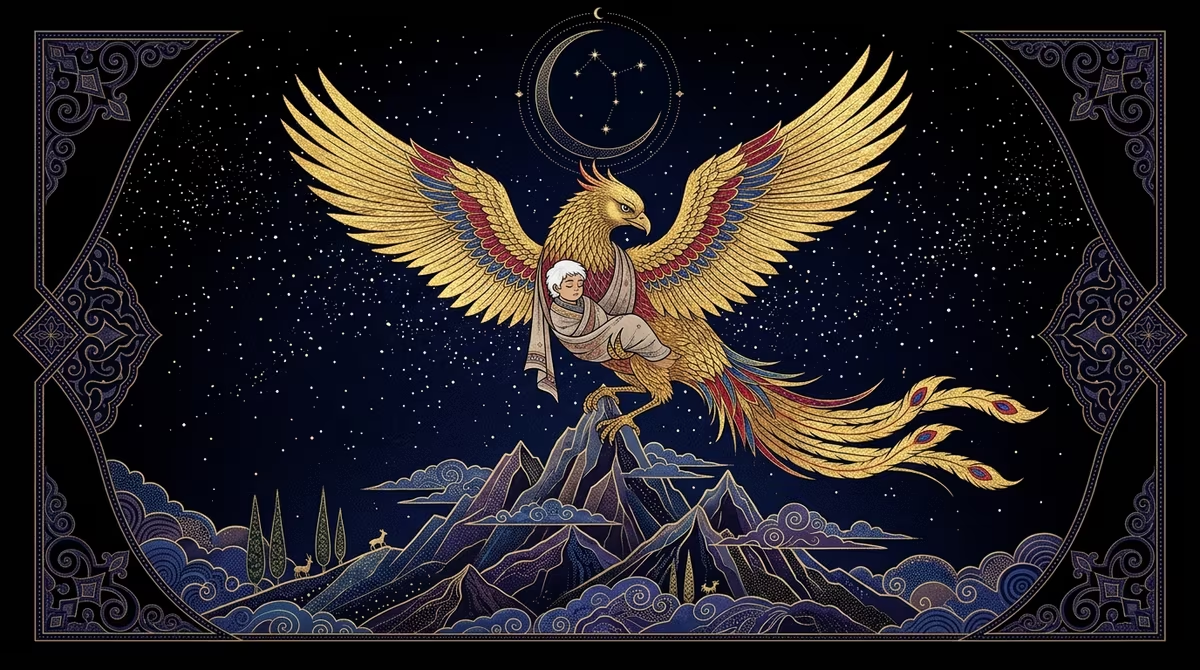
✨ Inscription Summary (Depth Psychological Key)
The banishment of white-haired Zal to Mount Alborz is a symbolic descent of the ego into the dark unconscious, commencing psychological individuation. His rearing by Simurgh represents reconciliation of Ego with the Self and Wise Old Man.
The Legend of Zal and Simurgh: The Archetype of Individuation & The Wise Old Man
Ferdowsi's Shahnameh is not merely a national epic; it is an infinite treasure of archetypes of the human collective unconscious. Among these, the story of Zal and the Simurgh is one of the deepest manifestations of Carl Gustav Jung's theory of Individuation.
Zal's Exile: Confronting the Shadow and Fear of Imperfection
Zal is born with hair as white as snow. Sam, his father, who is the world champion hero of Iran, is ashamed of having a different child. This shame represents the rejection of the "unconscious" and the non-acceptance of differences. In the Jungian perspective, Zal's white hair symbolizes premature wisdom and his deep connection to the collective wisdom of ancestors, but society and his father view him as a "Shadow" or a shameful factor and abandon him on the slopes of Mount Alborz.
"His hair was white as a silver tree, / Born in this manner by fate from his mother."
The exile of Zal to Mount Alborz is the descent of the hero into the world of solitude and immersion into the deep unconscious. Mount Alborz, in Iranian mythology, is the symbol of the center of the world (Axis Mundi) and the place connecting earth to sky; where the internal alchemy process begins.
Simurgh: Embodiment of the Wise Old Man and the Higher Self (The Self)
The Simurgh is a mythical bird nesting on the heights of Alborz. She does not kill the infant Zal, but nurtures him alongside her own chicks. In Jung's analytical psychology, the Simurgh symbolizes "The Self" or the archetype of the "Wise Old Man / Great Mother".
Simurgh represents supreme wisdom, psychic wholeness, and the unconditional compassion of the unconscious. She guides Zal from the margins to the center of the growth process.
- Simurgh's Nest: Symbol of the cosmic motherly womb (Archetypal Womb) in which the rejected child undergoes psychological reconstruction.
- Simurgh's Feather: Symbol of conscious connection to the unconscious during times of crisis. Burning the Simurgh's feather means summoning the instinctive, saving wisdom of the unconscious in moments of Ego desperation.
Returning to the Conscious World: Achieving Wholeness and Individuation
When Sam repents of his action and comes looking for Zal, Zal has reached psychological maturity. Simurgh returns him, but the bond between them is never severed. This phase represents the link between Zal's developed "Ego" and the "Higher Self".
Zal now possesses an integrated personality; he is not only a warrior but also carries the transcendental wisdom of the Simurgh. He marries Rudabeh, and this deep emotional union represents Zal's successful confrontation with the "Anima" archetype (the feminine spirit within the male) and the integration of opposites, leading to the birth of Rostam (the national hero and the symbol of supreme consciousness).
Conclusion of the Jungian Analysis
Zal's story teaches us that individuation and reaching the wholeness of the psyche require transitioning through the suffering of rejection, ascending the peaks of inner loneliness (Alborz), and accepting the wisdom of the unconscious (Simurgh). The secret of our soul is hidden in the darkest rejections, blossoming through divine grace and inner compassion.
Frequently Asked Questions (FAQ)
❓ Why is Zal's albino white hair symbolic?
White hair represents ancient archetypal wisdom of the collective unconscious present in a newborn, initially rejected by raw consciousness (Sam) but eventually becoming a beacon of guidance.
❓ What is the role of Mount Alborz in Zal's Individuation?
Alborz represents the absolute solitary peak of the interior world and the world-axis; a remote sanctuary away from artificial social masks where the soul performs inner alchemy.
❓ What does the feather of Simurgh symbolize?
It represents invoking unconscious resources during crisis. When the analytical Ego reaches an absolute dead end, relying on deeper instinctual reserves brings rescue.
❓ What is Simurgh's relationship to the Wise Old Man?
Simurgh is the perfect zoomorphic embodiment of the Wise Old Man / Great Mother archetype, accepting the outcast unconditionally and initiating him into higher lore.