Zahhak the Snake-Shouldered & The Inner Shadow
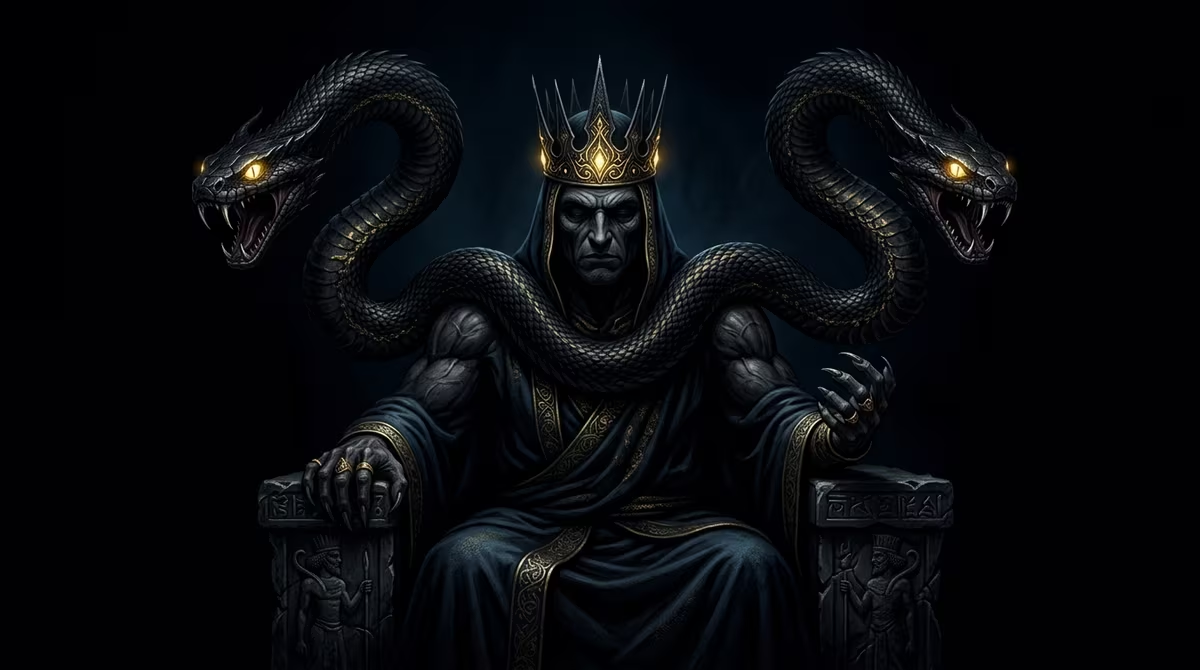
✨ Inscription Summary (Depth Psychological Key)
Zahhak, the snake-shouldered tyrant, represents the darkest uprising of the repressed Shadow and the destructive tyranny of an inflated Ego. His shoulder-snakes are animalistic desires fed on youth brains, reflecting total psychological possession.
Zahhak the Snake-Shouldered: Archetype of the Rebel Shadow & Devourer of Psyche
In Ferdowsi's Shahnameh, Zahhak the Snake-Shouldered is one of the most shocking characters. He is the concrete embodiment of evil, tyranny, and despotism. However, if we look at this myth through the lens of Carl Gustav Jung's analytical psychology, Zahhak represents the ultimate "Shadow"—suppressed, rebellious, and possessing the Ego.
The Kiss of Ahriman on Zahhak's Shoulders: The Rise of the Shadow
Zhak was an ambitious and weak-willed youth. He was deceived by Iblis (the Devil) to throw his own father, Merdas, into a pit to usurp the throne. This pact with darkness is the first step in separating from conscious moral wisdom.
Iblis appears again as a cook, stimulating Zahhak's greed and lust with delicious meat dishes. Finally, Iblis asks only to kiss Zahhak's shoulders as a reward. From the place of the Devil's kiss, two black snakes sprout.
"Two black snakes grew from his shoulders, / He became sorrowful and sought a remedy from all sides."
In the Jungian interpretation, the kiss of Ahriman symbolizes the direct intrusion of suppressed instincts into conscious awareness. The snakes on Zahhak's shoulders are devouring instincts, infinite greed, and suppressed psychological complexes that are now alive, conscious, and out of the Ego's control.
Feeding the Snakes with the Brains of Youths: Destruction of Psychic Vitality and Creativity
The snakes do not find peace unless they are fed the brains of two young men every day. Youths in mythology symbolize dynamism, innovation, hope, and the blossoming potential of the psyche. The brain symbolizes thought, wisdom, and awareness.
The devouring of the brains of youths by Zahhak's snakes represents the process of "Ego Devouring" by the Shadow:
-
When the suppressed Shadow takes power, it slaughters every new thought, creativity, and living hope (youths) within the human in order to survive itself.
-
A person trapped by the Zahhakian Shadow suffers from psychological stagnation, paranoid fear of overthrow, and unconditional cruelty. They sacrifice the integrity of their psyche to preserve a delusional sense of security.
Fereydun and Kaveh the Blacksmith: Rise of Consciousness and Restoring Balance
The Zahhakian Shadow rules over Iran for a thousand years. This mysterious number represents a long period of psychological suffering until the "Divine Glory" and consciousness awaken once more. Kaveh the Blacksmith is the symbol of will, holy conscious anger, and the rebellion of the suppressed inner class. He raises his leather apron, smelling of labor and truth, as the Kayanian Banner.
Fereydun, the young prince raised in the bosom of Mother Earth and the Purifying Cow (symbol of nature and pure instinct), leads the uprising. Fereydun does not kill Zahhak; instead, he binds him in the caves of Mount Damavand.
Why Didn't Fereydun Kill Zahhak? (The Great Jungian Lesson)
Not killing Zahhak and chaining him in Damavand is one of the deepest psychological points of the Shahnameh:
-
The Shadow Cannot Be Destroyed: If Fereydun had killed Zahhak, evil would have been reborn in another form, because the Shadow is an integral part of the whole psyche.
-
The Shadow Must Be Controlled and Contained: By chaining Zahhak in the dark depths of Mount Damavand's cave, Fereydun returns the Shadow to its original place (the depths of the unconscious) and controls it. This restores the balance between the conscious and unconscious.
Therefore, the way to fight the inner Zahhak is not by destroying instincts, but by recognizing them, understanding their destructive power, and ultimately chaining and intelligently controlling them in the depths of the unconscious.
Frequently Asked Questions (FAQ)
❓ What do the snakes on Zahhak's shoulders symbolize?
The snakes represent raw repressed instincts, insatiable greed, and dark complexes which, left unchecked by conscious awareness, hijack and enslave the Ego.
❓ Why did the snakes have to feed on the brains of young men?
The brain represents cognition and creativity; youth represents budding awareness. To survive, Zahhak's shadow must actively suppress and devour emerging conscious thoughts.
❓ What does Ahriman's kiss on Zahhak's shoulders indicate?
It reflects the unconscious infiltration of the Shadow through ego blind spots and ambition, where one sacrifices moral boundaries for quick empowerment.
❓ Why did Fereydun chain Zahhak in Mount Damavand instead of killing him?
In Jungian psychology, the Shadow cannot be completely annihilated; instead, it must be contained, bound, and monitored in the deep unconscious (Damavand) under watchful awareness.