Xerxes and Whipping the Sea: Ego Inflation in Documented History
✨ Inscription Summary (Depth Psychological Key)
The narrative of Xerxes ordering the whipping of the Hellespont sea is a powerful demonstration of the psychological concept of 'Ego Inflation' in documented history. This article explores how absolute power can blur the lines between personal will and the laws of nature.
Xerxes and Whipping the Sea: Ego Inflation in Documented History
In another article, we examined the mythological story of Jamshid as one of the most precise depictions of the Jungian concept of "Ego Inflation." However, the documented history of ancient Persia also contains a real and recorded example of this same phenomenon: the narrative of Xerxes, the Great Achaemenid King, and the famous moment when, by his command, they whipped the sea.
The Hellespont Bridge: A Symbol of Engineered Ambition
For his great military campaign against Greece, Xerxes ordered the construction of a massive bridge of ships across the Hellespont strait (the modern Dardanelles)—one of the most ambitious engineering projects of the ancient world, intended to transport the vast Achaemenid army from Asia to Europe.
The Storm: The Moment Nature Disobeyed the King's Plan
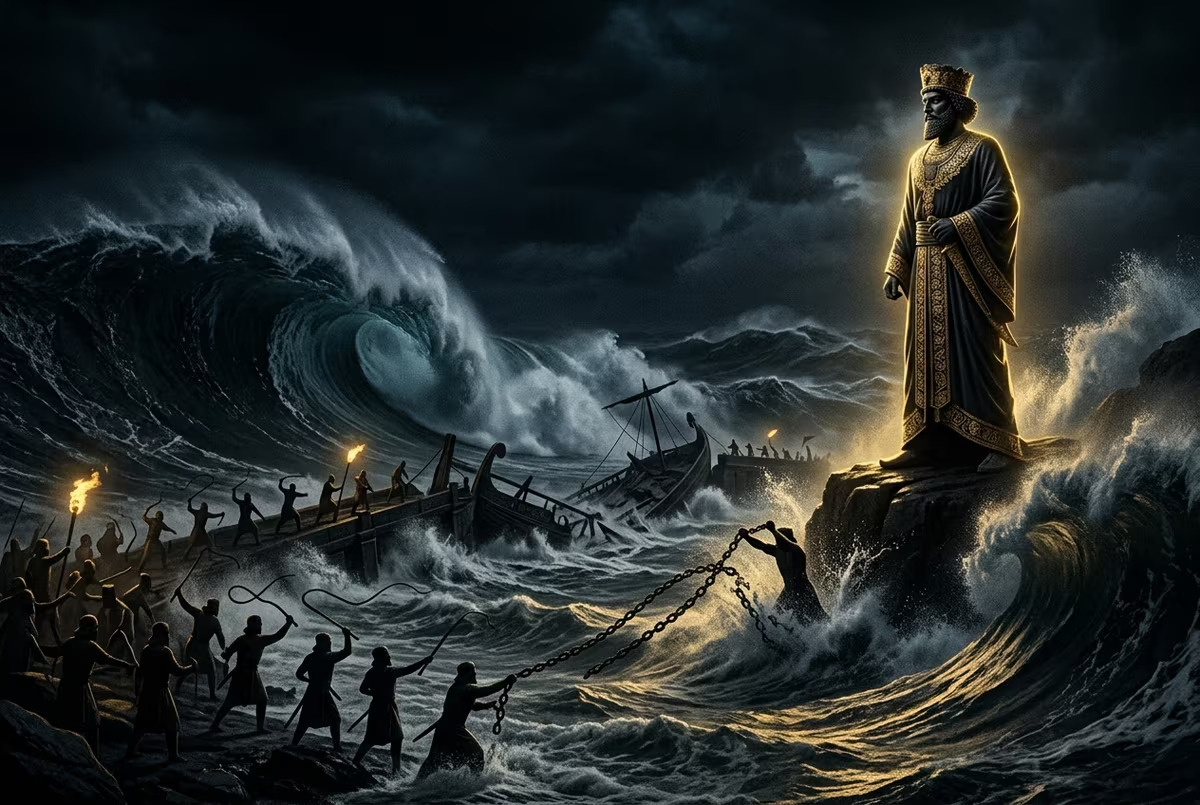
According to Herodotus's account, a violent storm destroyed this bridge at the very beginning. Xerxes's reaction to this event is the moment that makes this story a brilliant case study for Ego Inflation: as Herodotus tells it, Xerxes ordered the sea to be whipped three hundred times and iron shackles to be thrown into it—as if the sea were a rebellious subject that must be punished.
Ego Inflation: When Natural Limitations are Taken as Personal Insults
Jung explained that Ego Inflation occurs when the "Ego," instead of accepting its place within a larger (natural, social, or cosmic) order, perceives itself as the center and source of all power. Xerxes's reaction to the storm—interpreting a purely natural phenomenon as a personal disrespect that must be punished—is a classic example of this state: the boundary between a ruler's will and the fundamental laws of nature has blurred in his mind.
An Important Historiographical Note: Who is the Narrator?
As discussed in the article on Cambyses, we must look at the source of this narrative with caution: Herodotus, a Greek historian, writes this story about Greece's main enemy in the Greco-Persian Wars. It is highly possible that this narrative is, at least to some extent, an exaggeration designed to display an autocratic and irrational Persian ruler to a Greek audience—the same pattern of projection common in the historiography of wars between competing civilizations.
Nevertheless, even if we read this narrative with caution, its value as a psychological allegory remains: whether historically accurate or not, this story has stood for centuries as a symbol of the danger of inflated power—and this cultural endurance itself indicates the depth of this psychological warning.
The Second Bridge: A Sign of Adaptation, Not Just Stubbornness
A point often overlooked is that Xerxes, after this emotional reaction, ordered the construction of a new and stronger bridge—and this time with success. This detail shows that his initial reaction, although symbolic of a moment of Ego Inflation, was part of a reign that included both this momentary error and a return to a practical, engineering-oriented approach—a complexity that a simplistic narrative of a "mad king" ignores.
Why Does This Story Matter Today?
The story of Xerxes and the sea, regardless of the historical accuracy of its details, remains a timeless warning: the greater a person's power and success, the greater the danger of the illusion that all obstacles—even the laws of nature—must surrender to their will. Discerning the boundary between constructive ambition (such as rebuilding and succeeding with the bridge) and destructive Ego Inflation (such as punishing the sea) is one of the most critical tests of psychological maturity for any powerful individual.
Conclusion
Xerxes and the story of whipping the sea, whether it occurred exactly as Herodotus narrated or not, is one of the most enduring historical allegories for the Jungian concept of Ego Inflation—an example that, alongside the mythological narrative of Jamshid, demonstrates that this psychological danger transcends the border between myth and documented history, becoming an everlasting pattern in the history of human power.
Frequently Asked Questions (FAQ)
❓ What is the Jungian concept of 'Ego Inflation' in Xerxes's story?
Ego Inflation occurs when the ego perceives itself as the absolute center of power, immune to natural limitations. Punishing the sea symbolizes the projection of the ego's helplessness and defiance against the grand cosmic order.
❓ Why does Herodotus's analysis of this incident require historiographical caution?
Herodotus was a Greek historian and a rival. His narratives might be exaggerated or stylized through collective shadow projection to portray Achaemenid rulers as autocratic, irrational, and mad for a Greek audience.
❓ What aspect of psychic balance does the construction of the second bridge show?
This demonstrated that despite his initial emotional reaction, Xerxes was able to return to rational, engineering-oriented thinking, restoring the balance between ego ambition and material realism.