Tahmineh: The Mother Archetype and the Unconscious Desire for Union
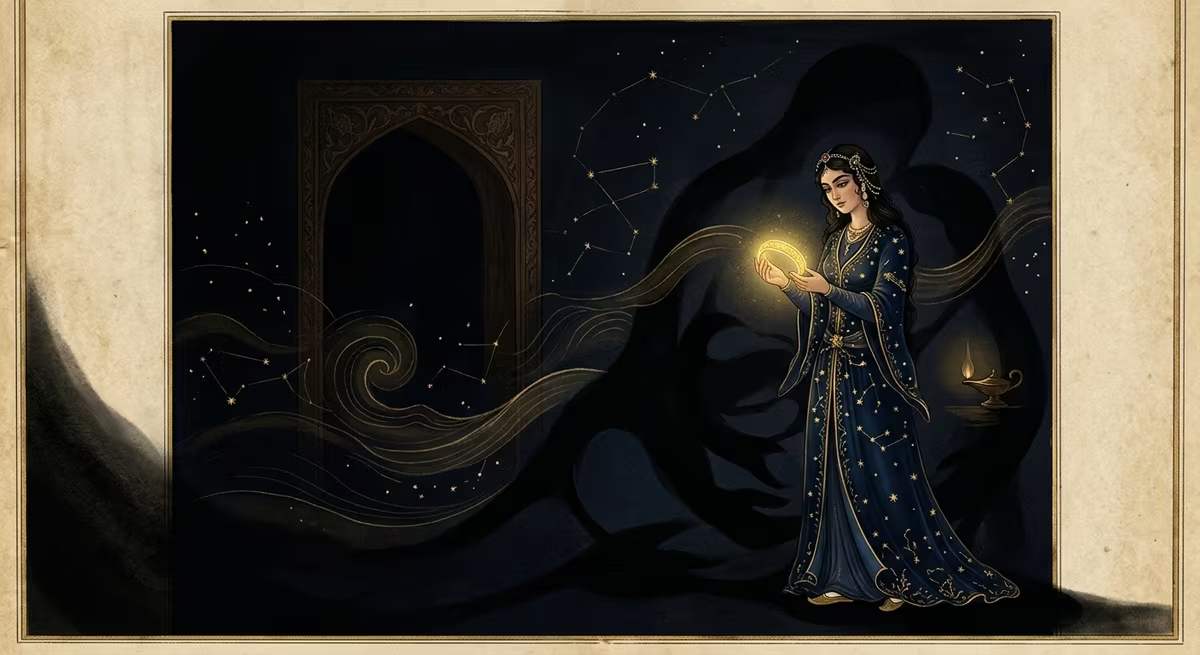
✨ Inscription Summary (Depth Psychological Key)
Tahmineh embodies the majesty of the Mother Archetype and active feminine agency. Far from passive, she consciously initiates the union with the hero (Rostam), representing the life-giving womb while carrying the tragic burden of losing her child to mythic destiny.
Tahmineh: The Mother Archetype and the Unconscious Desire for Union
Among the women of the Shahnameh, Tahmineh, the daughter of the King of Samangan, is a character whose story begins with unexpected boldness and ends with deep sorrow. Late at night, without her father's knowledge, she visits Rustam's tent and openly declares her love—an act that was exceptionally courageous for her time. The fruit of this union is Sohrab: a child whom Tahmineh raises alone, only to be slain by his own father, Rustam, on the battlefield.
This article explores Tahmineh from two Jungian perspectives: first, Tahmineh as the embodiment of the Mother archetype, and second, her initial bold action as a manifestation of a highly active and courageous Animus.
The Mother Archetype in Jungian Theory
Carl Jung considered the Mother archetype to be one of the most fundamental images of the collective unconscious. This archetype has two aspects: the positive Mother (nurturing, supportive, life-giving) and the negative or devouring Mother (controlling, anxiety-inducing, hindering the child's independence).
In the Shahnameh, Tahmineh is the perfect embodiment of the positive aspect of this archetype. She takes sole responsibility for raising Sohrab in the complete absence of his father, teaching her son both martial skills and the desire to seek out his father, Rustam. This dual training—strength and the desire for connection—forms the core of Sohrab's narrative.
The First Night: An Unexpected Action
The most striking aspect of Tahmineh's story is the beginning of her relationship with Rustam. In a culture where women were expected to be passive in emotional affairs, Tahmineh walks with absolute resolve to Rustam's tent and voices her desire. This action can be seen as a manifestation of a highly developed Animus—where a woman, rather than hoping for chance or external mediation, directly declares her will.
This scene is psychologically fascinating: Tahmineh acts not out of fleeting whim, but from a deep, conscious understanding of her desire. She tells Rustam that she has heard of his fame and valor, and wishes to bear his child—a statement that combines emotional longing (the Anima aspect) with independent decision-making (the Animus aspect).
Mother in the Absence of the Father: Sole Responsibility of Upbringing
After that night, Rustam leaves Samangan and never returns. From this point on, Tahmineh is solely responsible for Sohrab's growth and education—a role that makes her a prime example of a single, independent mother in ancient literature.
From a Jungian perspective, this solo upbringing has complex psychological ramifications. In the absence of a paternal role, Tahmineh must convey aspects of the Animus to Sohrab—martial skills, decision-making, and goal-directed strength. Yet, she cannot fully fill the paternal void; and it is this exact void that drives Sohrab to seek his father, ultimately leading to the tragedy of their duel.
Rustam's Token: Symbol of an Unfinished Connection
Tahmineh gives Sohrab an armlet that his father had bound to his arm, so that he may recognize him one day. In Jungian symbolic language, this token represents an unfinished connection: a link that should connect the child to the source of his identity (father, lineage, roots), but in the Shahnameh, this token is only recognized too late—after Sohrab is slain by Rustam.
This delay in recognition is one of the most tragic metaphors of the Shahnameh regarding this psychological truth: symbols of connection alone are not enough to prevent disaster; they must be read and understood at the right time.
Tahmineh and Grief: The Maternal Reaction to a Child's Death
When news of Sohrab's death reaches Tahmineh, her reaction—deep mourning, cursing, and in some traditions, death from grief—is the ultimate manifestation of the Mother archetype losing her child, a vital part of her own existence and future. This grief is not merely an individual emotional reaction, but a reflection of an archetypal reality: the mother-child bond is experienced in the deepest layers of the collective unconscious as a vital, unbreakable union.
Why Tahmineh Matters Today
Tahmineh's story offers two important psychological lessons for today's audience: first, that expressing one's desires and inner yearnings directly—even against social expectations—can be a sign of a healthy, integrated Animus rather than weakness or guilt. Second, that raising a child in the absence of one parent, though challenging, can be managed with greater awareness when the psychological voids are understood—a truth that the tragedy of Sohrab and Rustam reminds us of the high cost of ignoring.
Conclusion
At a simple glance, Tahmineh does not merely play the role of a sacrificial mother; she is a complex blend of Animus boldness, maternal love, and the tragedy of an unfinished connection. Her character reminds us of the Jungian truth that no archetype, even that of the mother, can achieve its full completion alone without integrating with the other forces of the psyche.
Frequently Asked Questions (FAQ)
❓ Why is Tahmineh a symbol of the empowered Mother?
In contrast to passive feminine tropes, Tahmineh chooses her destiny and actively selects Rostam to father her child, reflecting independent female agency and strength.
❓ How is the relationship between Tahmineh and Sohrab analyzed in Jungian terms?
Tahmineh represents the nourishing mother who rears a child of immense potential, but successfully restrains her devouring fears, allowing him to step out into his own destiny.
❓ What does Tahmineh's grief after Sohrab's death signify?
Her profound grief represents the collapse of the psyche's creative womb after the destruction of its creation (Sohrab), a total surrender to mythic suffering.
❓ What is the difference between Tahmineh and the Anima archetype?
While Anima represents the inner feminine guide of a man, Tahmineh goes beyond to portray the earthly, protective, and sacrificial embodiment of the Mother archetype.