Sudabeh: The Negative Animus and Power in the Service of Deception
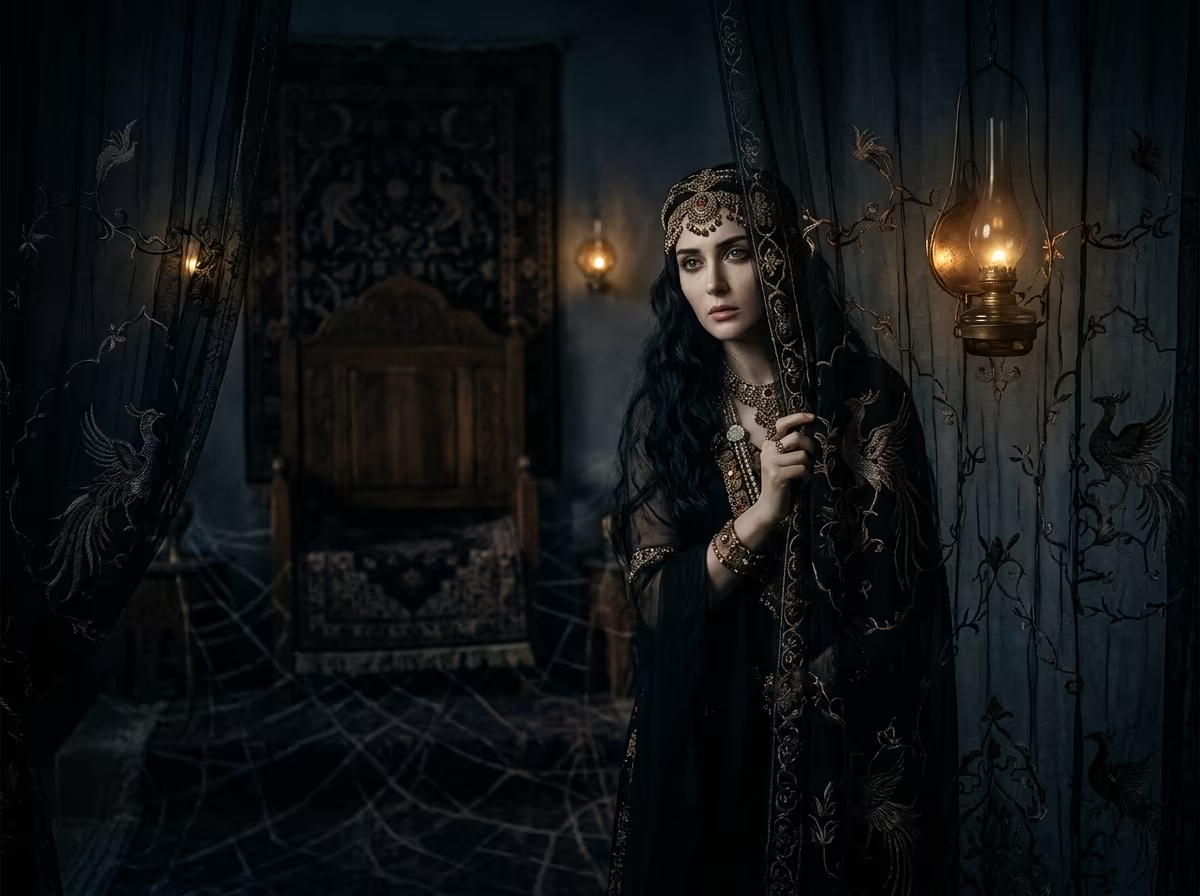
✨ Inscription Summary (Depth Psychological Key)
Sudabeh, stepmother of Siavash, represents the manipulative Anima and the negative Animus. Instead of direct and honest expression, she channels her formidable intellect and power into conspiracy, victim-playing, and intrigue, resulting in the tragic murder of Siavash.
Sudabeh: The Negative Animus and Power in the Service of Deception
For every constructive archetype, Jung believed there exists a destructive counterpart—the same psychic energy that can be employed in the service of truth or deception. If Farangis is the shining example of an integrated and honest Animus, Sudabeh, the stepmother of Siavash, is the dark, mirror image of that very same force.
Who is Sudabeh?
Sudabeh, the queen of King Kavus and stepmother of Siavash, is one of the most complex and controversial figures in the Shahnameh. She falls in love with Siavash—a forbidden and dangerous love—and when Siavash rejects her advances, Sudabeh, instead of facing her feelings honestly, resorts to conspiracy and intrigue. She falsely accuses Siavash to clear herself of blame, setting off a chain of devastating tragedies.
The Negative Animus: Same Force, Different Path
Jung explained that the Animus—the masculine unconscious force in a woman, symbolizing intellect, will, and self-assertion—can manifest in two completely different ways. In its healthy state, it translates into decisiveness, intellectual independence, and direct action (precisely what we saw in Farangis). But in its discordant state, this same force can manifest as dogmatism, manipulation, and covert control.
Sudabeh possesses a stubborn will and sharp intellect—there is no denying that. But instead of using this resolve to express her desires directly, she channels it into deception. Instead of saying, "This is what I feel, and this is my reaction to being rejected," she prefers to rewrite reality to escape accountability.
Why Sudabeh Resorts to Intrigue
From a Jungian perspective, when the Animus cannot express itself directly and honestly—either due to fear of social consequences or an internalized pattern of covert power—it resorts to projection and manipulation instead of action. As the king's wife, Sudabeh possesses apparent power, but this power does not allow her to speak openly of a forbidden passion; so, instead of accepting rejection, she chooses the path of indirect control.
This pattern is highly recognizable today: individuals who, instead of directly stating a need or grievance, achieve their goals through manipulation, playing the victim, or covert schemes—exactly the mechanism Sudabeh employs in the epic.
The Cost of the Deceptive Animus
The consequence of Sudabeh's action is not only the suffering of others (Siavash, and ultimately herself); Sudabeh herself remains in the history of the Shahnameh as a symbol of deception—an identity coupled with mistrust and eventual ruin. This is precisely what Jung warned about: a psychological force employed in the service of deception eventually devours the individual themselves.
Sudabeh vs. Farangis: One Force, Two Destinies
The comparison of these two Shahnameh women is one of the clearest lessons in Jungian psychology: both are independent, highly intelligent, and strong-willed women. The difference lies in the path their will takes—one toward truth and direct confrontation (Farangis), the other toward deception and covert control (Sudabeh). This difference lies not in the strength of the Animus, but in the integrity and honesty of its use.
Why Sudabeh Matters Today
Sudabeh is a reminder that possessing power, will, or intelligence does not in itself guarantee a healthy life. The question she posed for us thousands of years ago is: when a desire cannot be expressed directly, what path do we choose? Honest confrontation, or covert deception? The answer to this question separates our path from a destiny like Farangis's or a destiny like Sudabeh's.
Conclusion
Sudabeh and Farangis show two sides of the same psychological coin: an Animus that can be in the service of justice or deception. The Shahnameh, by placing these two women side-by-side without using the words "Jung" or "Animus", narrates the deepest lesson of analytical psychology: inner power is constructive only when it serves honesty.
Frequently Asked Questions (FAQ)
❓ How does the negative Animus manifest in Sudabeh's character?
Through covert control, mental manipulation of others, refusal to accept reality, and rewriting truth to clear herself; this stands in stark contrast to Farangis's positive Animus, which relied on direct, brave self-expression.
❓ Why is Sudabeh's intrigue a common psychological pattern?
Because whenever the psyche avoids honest confrontation with its desires or rejections, failing to take responsibility, it falls into victimhood and manipulation to maintain covert control.