Rumi's Ney-Nameh: The Cry of Separation from the Authentic Self
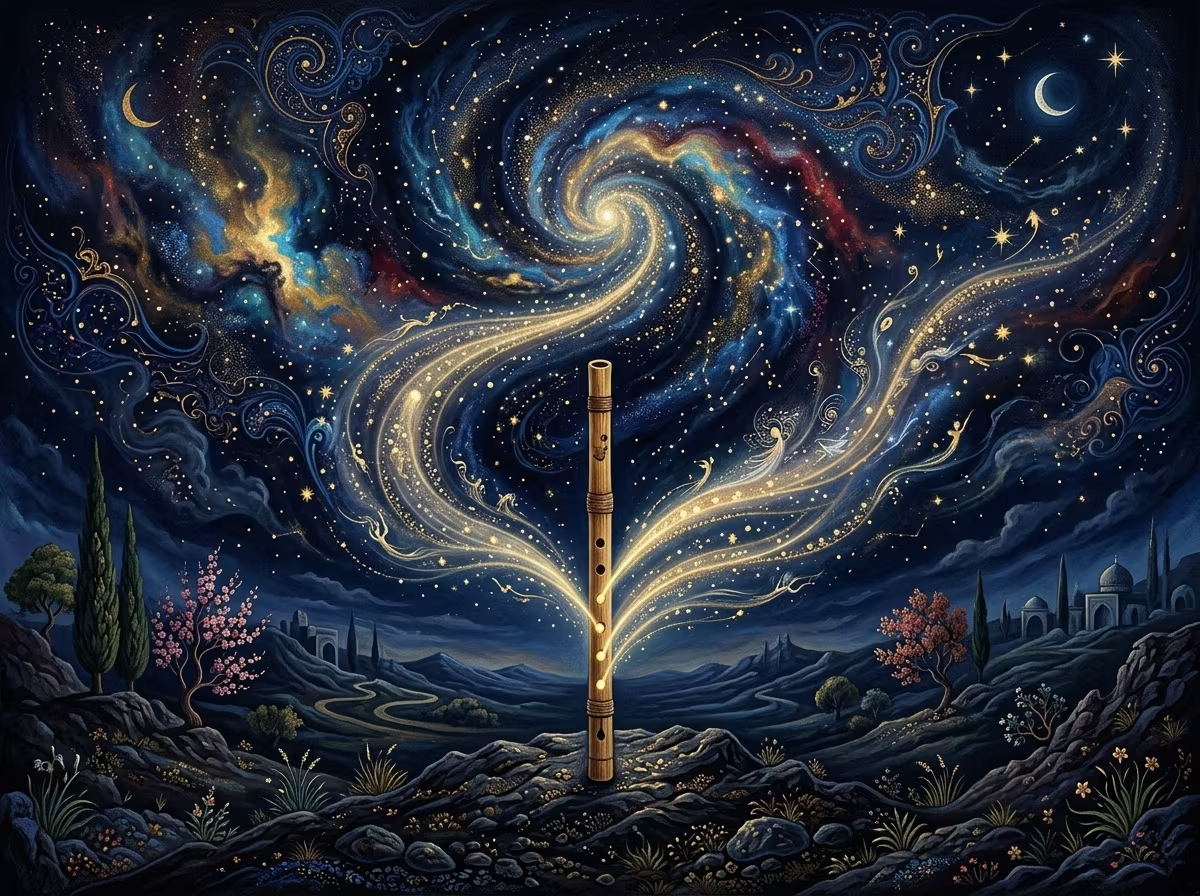
✨ Inscription Summary (Depth Psychological Key)
Rumi's Ney-Nameh is a powerful metaphor of the Ego's painful separation from its authentic source (the Self), symbolized by a reed cut from its reedbed. The reed's cry represents the unconscious longing to return to primary psychic integration and wholeness.
Rumi's Ney-Nameh: The Cry of Separation from the Authentic Self
The Mathnawi of Rumi begins with one of the most stirring images in world mystical literature: a reed (Ney) cut from its reedbed (Nayestan), whose sole purpose thereafter is to lament this separation. The "Ney-Nameh" (Song of the Reed) is not just a poetic introduction, but one of the deepest literary expressions of what Jung called the unconscious longing to return to the integration of the Self.
The Reed and the Reedbed: A Metaphor for the Soul's Separation from Its Source
"Listen to this reed as it complains / telling a tale of separations" — this reed, cut from its original bed, symbolically represents the human being separated from an authentic, primary unity and now attempting to express this loss.
From a Jungian perspective, this is a powerful metaphor for the state of the modern human psyche: the "Ego" separated from the deeper, more integrated source of the psyche—what Jung calls the "Higher Self"—and now, consciously or unconsciously, longing to return to that unity.
Why Does the Reed "Lament"? — The Unconscious and Symbolic Language
Interestingly, the reed does not speak of its separation directly; rather, it laments (wails)—meaning its language is not direct and logical, but symbolic and emotional. From a Jungian view, this is exactly the language of the unconscious: not through transparent propositions, but through symbols, dreams, art, and—as we see here—music and poetry.
Rumi deepens this idea by choosing the reed (which only produces sound when air passes through its holes, made with pain and skill): the most beautiful expression of the psyche often forms from its wounds and fissures (the holes of the reed), not despite them.
Longing: The Driving Force of Individuation
Rumi states that anyone who is cast far from their source longs for the day of reunion. This "longing"—not just a passing feeling, but a fundamental force—represents, from a Jungian perspective, the very psychic energy (libido) that drives the individual toward the process of individuation. Without this longing (which can manifest as anxiety, restlessness, or a vague sense of inner lack), one would never find the motivation to begin the journey of self-discovery.
An Important Distinction from "Mental Illness": Longing as a Gift, Not a Disease
A subtle point that Rumi (and in parallel, Jung) emphasizes is that this feeling of separation and longing is not a "defect" to be eradicated, but rather the driving force of growth. If the reed were never separated from the reedbed, it could never sing. This pain of separation is what enables the creation of beauty and meaning.
From a Jungian perspective, this is a vital insight: many of humanity's deepest artworks, psychological insights, and spiritual growths are born precisely from this sense of lack and longing for integration—not from a comfortable, tension-free state.
The Fire of Love: A Symbol of Transformation, Not Just Pain
Rumi links the reed with the "fire of love"—not a fire that merely burns, but a fire that transforms. This image aligns closely with the Jungian concept of psychic transformation through conscious confrontation with suffering: suffering, when repressed or denied, is destructive; but when consciously accepted and converted into a creative force (poetry, music, insight), it becomes one of the most powerful engines of psychological growth.
Why Ney-Nameh Matters Today
The Ney-Nameh reminds us that feeling incomplete, longing, or even a vague and inexplicable sadness is not necessarily a sign of a problem; it can be an invitation from the deepest part of our psyche to begin a journey of return to integration. The question Rumi asks us is: do we hear the lament of our inner reed, or do we ignore it?
Summary
In the opening verses of the Mathnawi, Rumi provides one of the most concise yet profound literary expressions of the human psyche separated from its authentic source, seeking its way back and integrating through the pain of this separation—exactly the journey Jung, seven centuries later, called "individuation."
Frequently Asked Questions (FAQ)
❓ Why did Rumi choose the reed as a symbol for the soul's cry?
Because a reed must be hollowed out to produce sound; this emptying symbolizes releasing the false ego and superficial attachments so that the true Self can flow through.
❓ What is the link between the reed's lament and the unconscious?
The lament uses non-linear, emotional, and symbolic expression, which is the native language of the unconscious, transforming deep existential trauma and separation into sublime art.
❓ Why is the pain of separation not viewed as a defect in this allegory?
Because this pain and longing (libido) is the primary engine driving psychological growth and individuation; without this restlessness, there would be no motivation to transcend the mundane ego.