Midlife Crisis & The Call of the Second Half of Life
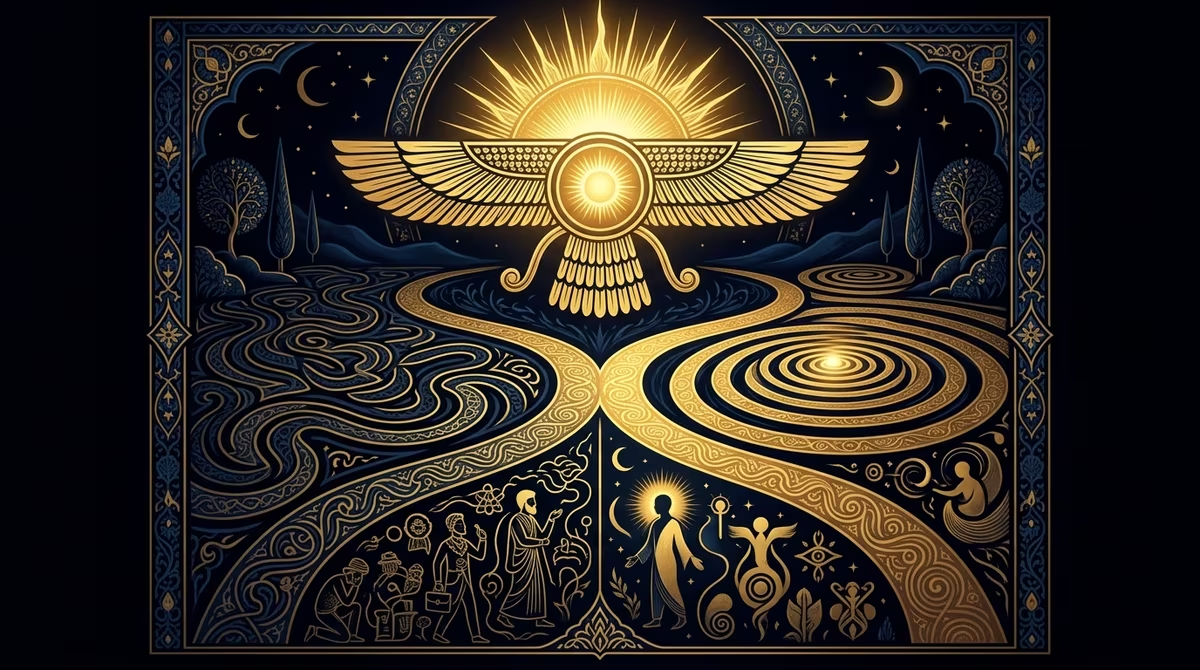
✨ Inscription Summary (Depth Psychological Key)
The midlife crisis is the collapse of the Persona built in the first half of life, paving the way for the deep calling of the Self in the second half. This existential shift from Ego pursuits to psychic integration requires embracing suffering, facing shadows, and actualizing individuation.
Midlife Crisis & The Call of the Second Half of Life
Many individuals, upon reaching the ages of 35 to 40, suddenly encounter a sense of emptiness, confusion, and deep existential questions. Activities that were once thrilling—such as career advancement, purchasing a new car, or gaining social status—no longer hold the same meaning. While popular culture often classifies this state as a "midlife crisis," Carl Gustav Jung, the renowned Swiss psychiatrist, offered a profoundly different and masterful perspective on this period.
According to Jung, midlife is not a pathology or a crisis, but rather a "psychological calling" and the commencement of the most significant phase of human life: the second half of life.
The Distinction Between the First and Second Halves of Life
Jung divided the psychological architecture of human life into two completely distinct periods, each governed by its own unique objectives and rules:
- The First Half of Life (The Development of the Ego): During this phase (from birth to approximately age 35), the psyche's focus is directed toward the external world. An individual must secure their place in society, establish a career, build a family, and craft a strong "persona" (the mask) for interacting with the world. This is a time of material and external expansion.
- The Second Half of Life (The Realization of the Self): After age 35 or 40, the objective of the psyche undergoes a complete reversal. Now is the time to turn inward, integrate repressed aspects of oneself, and advance toward Individuation—the process of becoming who we truly are, rather than who society demanded we be.
Why Does Midlife Crisis Occur? (The Sun’s Arc in the Sky of the Psyche)
To describe midlife, Jung employed the metaphor of the sun's journey across the sky. In the morning, the sun rises, gathers strength, and ascends to its zenith at noon. This represents the first half of life. However, the sun cannot remain at the zenith indefinitely; its afternoon descent begins, where the objective is no longer ascent, but rather sinking toward the horizon and casting a deeper, softer warmth.
The crisis manifests when an individual attempts to navigate the second half of life using the same parameters and rules of the first half (striving for more power, more material possessions, and more external validation). Jung famously observed: "We cannot live the afternoon of life according to the program of life's morning; for what was great in the morning will be little at evening, and what was true in the morning will at evening have become a lie."
Stages of Awakening and Transcending the Crisis
For this crisis to transform into a psychological awakening and rebirth, the human psyche must progress through three pivotal stages:
1. The Dissolution of the Persona (The Masks)
In midlife, we realize that the masks we have worn for years to appear successful, perfect, or strong no longer align with our inner truth. Acknowledging this vulnerability and removing these masks constitutes the initial step toward awakening.2. Confronting the Shadow and the Anima/Animus
Aspects of ourselves that were suppressed during the first half of life to appease others or due to upbringing (the Shadows) re-emerge with vigor during midlife. Concurrently, men must connect with their emotional and intuitive dimensions (Anima), while women need to embrace their independence and logical aspects (Animus) to achieve inner equilibrium.3. Shifting the Psyche's Center of Gravity from Ego to Self
At this juncture, the individual ceases to seek validation from supervisors, society, or peers. The psyche's command center shifts from the superficial Ego to the transcendent Self, leading to profound serenity, wisdom, and authenticity.Conclusion: Meaning, the Elixir of the Second Half of Life
The midlife crisis is a biological and spiritual alarm; it signals that your soul thirsts for meaning, not for repetitive external achievements. If you feel disoriented at this stage of life, it is not a sign of psychological defect, but a harbinger of awakening. Your psyche is shedding its old skin to elevate you from a merely successful societal actor to a complete, integrated, and authentic human being. Trust this inner voice and embark on the journey within.
Frequently Asked Questions (FAQ)
❓ What is the difference between the first and second halves of life according to Jung?
The first half focuses on establishing the Ego, building career/relationships, and developing a Persona; the second half is dedicated to reflection, spirituality, and psychic integration (Self).
❓ Why is midlife crisis often accompanied by a sense of emptiness?
Because material milestones can no longer nourish the inner psyche, and the Ego realizes that past social masks are insufficient to answer deep existential questions.
❓ What is Jung's remedy for navigating the midlife transition?
Creative acceptance of existential pain, integrating repressed shadows, analyzing dreams, practicing active imagination, and allowing the unconscious to guide the psyche toward individuation.
❓ Which archetype is most closely linked to this transition?
The archetype of the Self and the Wise Old Man, which act as internal anchors and guides, leading the psyche from the darkness of ignorance into inner light.