Khayyam and the Confrontation with Death: The Archetype of Embracing Mortality
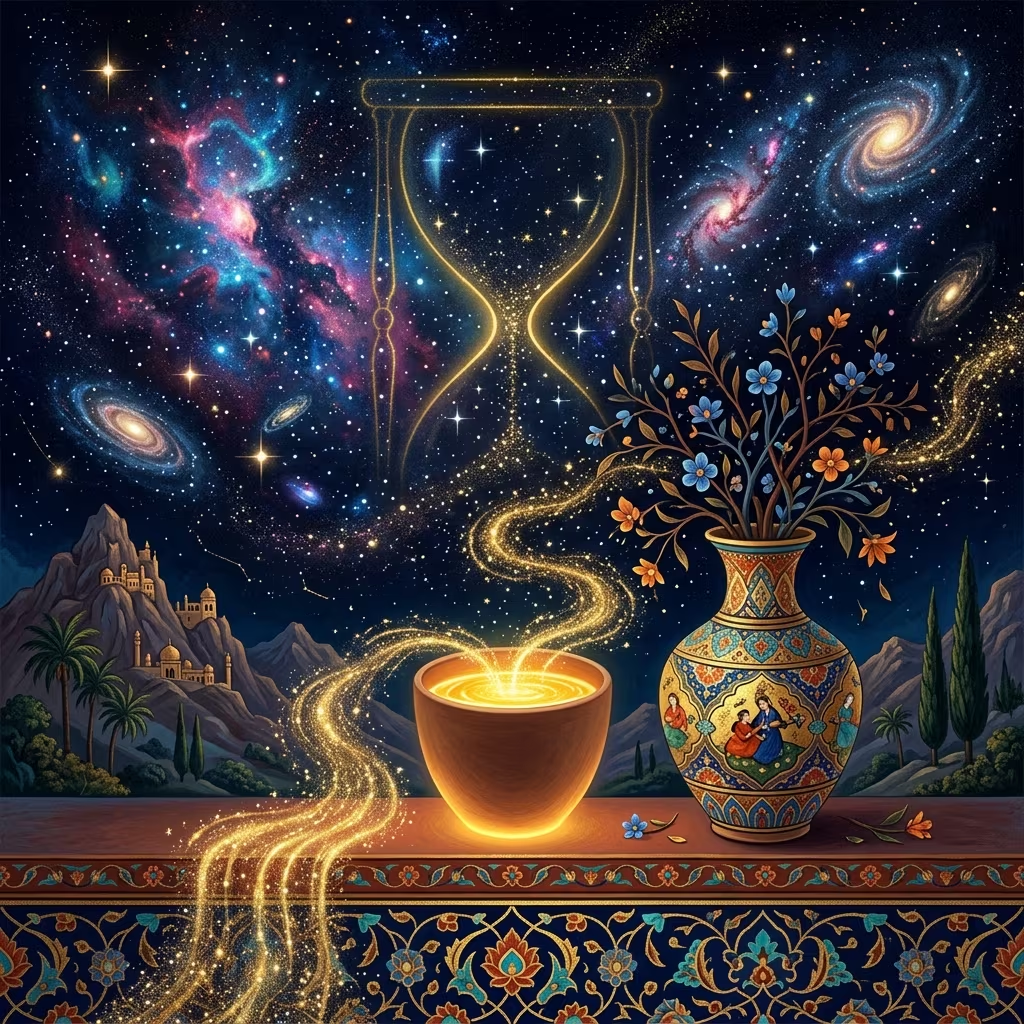
✨ Inscription Summary (Depth Psychological Key)
A psychological analysis of Khayyam's Rubaiyat in confronting the shadow of death and existential anxiety. By depicting clay cups made from the ashes of ancestors, Khayyam turns the acceptance of mortality into a catalyst for ego awakening and authentic presence (carpe diem).
Khayyam and the Confrontation with Death: The Archetype of Embracing Mortality
Omar Khayyam, the great mathematician and astronomer of Nishapur, addresses a subject in his Rubaiyat with a rarity of candor in classical literature: death, the passage of time, and the inevitable mortality of humankind. This article explores how Khayyam's Rubaiyat offers one of the most precise literary approaches to what Jung termed a healthy confrontation with the shadow of death.
Why Did Jung Value Death as Part of Individuation?
Jung believed that denying or repressing the awareness of death is one of the greatest obstacles to psychological growth in the second half of life. In his writings on the "call of the second half of life," he emphasized that conscious acceptance of life's temporal limits is not a tragic surrender, but a necessary condition for living deeply and meaningfully in the present moment.
Khayyam: Direct Confrontation, Not Escape
Khayyam's Rubaiyat addresses death with unprecedented directness: "This clay cup was once a weeping lover / Captive to the tresses of a beloved"—the image of a clay cup that was once a living human is a repeated and candid reminder of mortality.
From a Jungian perspective, this direct and unpretentious confrontation indicates a rare psychological maturity. Rather than denying death (which often manifests as constant amusement, denial of aging, or distancing oneself from the subject), Khayyam faces this reality directly and turns it into a philosophical framework for living.
"Today" as the Only Reality: A Critique of Future-Oriented Inflation
Khayyam repeatedly emphasizes the present moment: "Before you and me, night and day existed," inviting us not to over-attach to the past or obsess about the future. From a Jungian perspective, this is a critique of what can be called "escaping the present through the future"—when an individual expends all their psychic energy worrying about a future that never arrives as imagined.
Was Khayyam a Pessimist? A Closer Look
A superficial interpretation of Khayyam sees him as a pessimist or a mere hedonist. However, a closer reading of the Rubaiyat reveals a different picture: Khayyam does not deny death, nor does he run from it, but this very confrontation drives him to experience the present moment more deeply and consciously—whether through joy or philosophical reflection. This is precisely what Jung called a "constructive confrontation with limitation."
Cosmic Cycles: Death as Part of a Greater Order
Many of Khayyam's verses place individual death within the context of larger cosmic cycles (seasons, earth's rotation, succession of generations). This framing, psychologically speaking, can reduce death anxiety: when an individual sees themselves as part of a larger, ongoing cycle, personal death is experienced less as absolute destruction and more as a natural part of a grander order.
Conclusion
Khayyam, with a candor that remains fresh after centuries, offers one of the most precise philosophical-psychological approaches to the question of mortality. His Rubaiyat, instead of denying or repressing this fundamental truth of human existence, invites a conscious confrontation with it—a confrontation that, as Jung demonstrated seven centuries later, is a prerequisite for a deep and meaningful life.
Frequently Asked Questions (FAQ)
❓ How does Khayyam address existential anxiety?
Rather than soothing death anxiety with comfortable illusions, Khayyam faces it. He shows that the conscious acceptance of mortality is the ultimate antidote to existential dread.
❓ What do the clay pot and dust symbolize in Khayyam's work?
The pot symbolizes the psychological vessel, the physical body, and transience. The dust represents the primal origin and return of all Ego structures back into the maternal unconscious.
❓ What does Khayyam's 'carpe diem' mean in Jungian psychology?
It is far deeper than superficial hedonism; it is the absolute awakening of consciousness (the Ego) in the present, free from regrets of the past or fears of the future, in alignment with the Self.