Kaveh the Blacksmith and the Collective Shadow: When a Nation's Grief Becomes a Banner
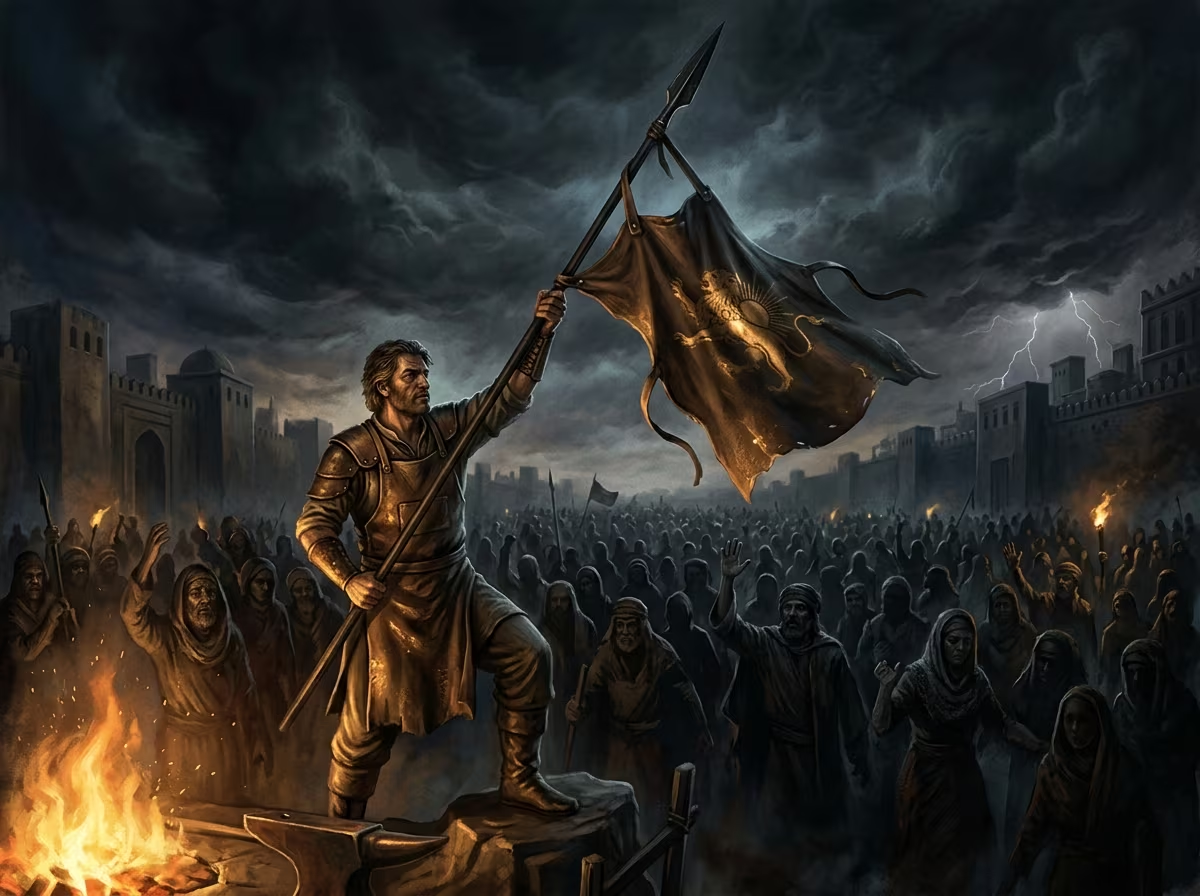
✨ Inscription Summary (Depth Psychological Key)
Kaveh the Blacksmith represents the ordinary, suffering individual who crystallizes the repressed collective anger of an oppressed society (the collective shadow) into Derafsh-e Kavyani. By guiding this energy toward Fereydun's ethical leadership, he saves society from chaos.
Kaveh the Blacksmith and the Collective Shadow: When a Nation's Grief Becomes a Banner
Among all the heroes of the Shahnameh, Kaveh the Blacksmith occupies a unique position: he is neither a prince nor a legendary warrior of divine lineage—he is a simple blacksmith whose sons have been sacrificed to Zahhak's tyranny. When Kaveh raises his leather apron on a spear, transforming it into the banner of rebellion ("Derafsh-e Kavyani"), something occurs that transcends a mere uprising: it is the manifestation of what Jung termed the Collective Shadow.
The Collective Shadow Through Jung's Lens
Jung usually explained the Shadow archetype at an individual level—the repressed, unacknowledged aspects of a single personality. However, he also introduced the concept of the Collective Unconscious: when an entire society is subjected to prolonged oppression or tyranny, the anger and trauma that each individual suppresses in isolation accumulates at a collective level. This accumulation remains latent until a spark (not necessarily the greatest suffering, but often a highly symbolic injustice) unleashes it.
Zahhak, as the embodiment of the repressed individual shadow, plays another role here: he is the oppressor who accumulates the collective shadow of a nation through direct, long-term tyranny.
Kaveh: The Conduit of the Collective Shadow
Kaveh is an ordinary blacksmith—neither a hero nor a prince. This choice by Ferdowsi is deeply significant: the uprising against tyranny does not begin with an elite mythical figure, but with an ordinary human whose suffering has reached an unbearable threshold.
When Kaveh loses his children, he is not the only one suffering—but he is the only one who translates this individual grief into a collective action. His leather apron, a humble symbol of the working class, becomes a national banner. From a Jungian perspective, this is exactly what happens when a nation's collective shadow, channeled through an individual, forces its way into collective consciousness and translates into action.
Why the People Joined Kaveh
The crucial psychological point is that Kaveh does not rise alone. The moment he raises his apron, the people who had suffered in silence for years suddenly find themselves represented in that symbol. This phenomenon is what Jung called archetypal constellation: a simple, tangible symbol suddenly becomes capable of holding the psychological charge of an entire population and uniting them.
Derafsh-e Kavyani, from that moment on, is no longer just a simple leather apron; it becomes the national and psychological symbol of resistance against tyranny—a symbol that has remained alive in Iranian culture for centuries.
The Danger of the Unleashed Collective Shadow: Fereydun's Responsibility
Another vital aspect is that Kaveh does not seize power for himself. He leads the people to Fereydun—the hero who ultimately defeats Zahhak. This transfer of leadership is Jungian-significant: the unleashed collective shadow, if not integrated and guided by a unifying force (Fereydun, as the symbol of a moral and responsible authority), can turn into an instrument of mindless violence and chaos. Kaveh, by directing this energy toward Fereydun rather than himself, prevents the rebellion from devolving into aimless anarchy.
Why Kaveh Matters Today
Kaveh's story poses a fundamental question for any society: repressed collective grief, if ignored for too long, will eventually find a way to surface—the question is whether this manifestation will be guided toward justice, or undirected and destructive. Kaveh shows us that even an ordinary individual, by turning their suffering into a symbol for others, can release a massive, moral force.
Conclusion
Kaveh the Blacksmith, without bearing any special mythical titles, is one of the most powerful symbols of the Shahnameh: the manifestation of the moment when a nation's collective shadow, through the suffering of an ordinary person, transforms into consciousness and action. Derafsh-e Kavyani, this simple leather apron, is an eternal reminder that the greatest historical transformations sometimes begin not from the powerful, but from the most ordinary humans whose suffering has reached its final threshold.
Frequently Asked Questions (FAQ)
❓ What is the concept of the Collective Shadow in Kaveh's rebellion?
When the anger and trauma of individual citizens are suppressed for a long time by a tyrant, a powerful, shared psychological energy builds up, which, when triggered, dismantles the oppressive structure.
❓ What does Derafsh-e Kavyani symbolize in Jungian terms?
Derafsh-e Kavyani (the blacksmith's apron) represents the awakening of collective awareness from the humblest societal strata, transforming fragmented suffering into a unified, moral action.