Ferdowsi: The Creator Archetype and Guardian of Collective Identity
✨ Inscription Summary (Depth Psychological Key)
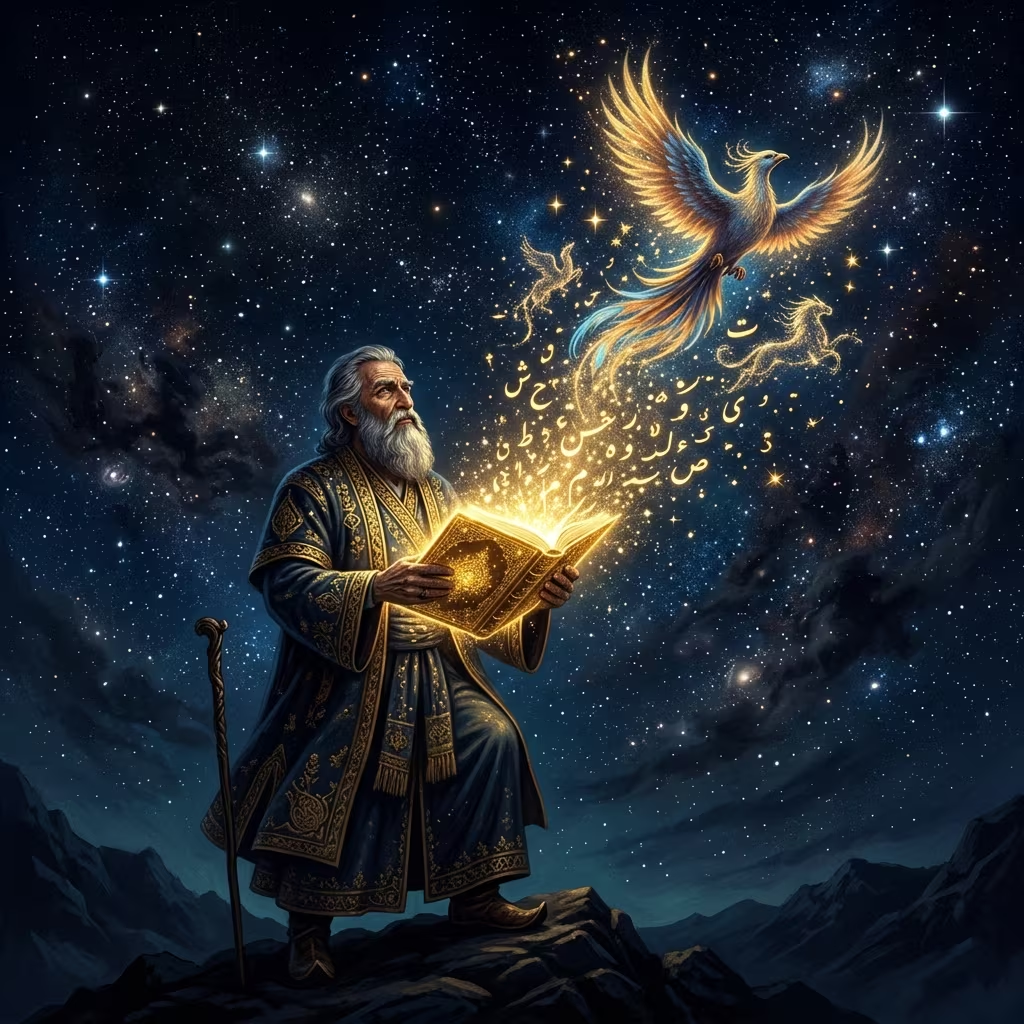
A psychological analysis of Ferdowsi's role as the architect of the Iranian collective unconscious. By composing the Shahnameh, he did not just preserve myths, but embodied the Guardian and Wise Old Man archetypes, preventing the psychological fragmentation of a nation.
Ferdowsi: The Creator Archetype and Guardian of Collective Identity
In all the articles we have written so far about the characters of the Shahnameh—Rostam, Farangis, Zahhak, Kaveh—one figure has never been directly analyzed: Ferdowsi himself, the poet who dedicated thirty years of his life to composing this grand epic. This article focuses on the creator of the Shahnameh, who appears in the form of a unique archetype: The Guardian of Collective Identity.
Why Did Ferdowsi Compose This Epic?
In the tenth century (4th century AH), the Persian language and cultural identity were under immense pressure of Arabization following the Arab conquest. Inspired by a prose compilation (the Abu-Mansuri Shahnameh), Ferdowsi decided to recreate the myths and history of ancient Persia in poetic form—which possessed greater longevity and transferability.
The Guardian Archetype: Beyond a Narrator
From a Jungian perspective, Ferdowsi can be viewed as the embodiment of a specific archetype: The Guardian of Collective Memory. Unlike the Wise Old Man (who provides individual guidance), the Guardian of Collective Identity is tasked with preserving and transmitting the core archetypes, values, and historical consciousness of an entire society to future generations.
Without such guardians, the collective unconscious of a nation—its shared myths, symbols, and narratives—faces the risk of disintegration and being absorbed into dominant external cultures.
Thirty Years of Pain: The Price of Preserving Identity
Ferdowsi references the extreme hardships of composing the Shahnameh in several verses, ranging from financial difficulties to political pressures. From a Jungian perspective, this "thirty years of struggle" represents a profound truth: guarding a collective identity is a demanding task. It requires immense personal sacrifice, a pattern repeated by cultural builders, historians, and educators throughout history who carry the weight of a collective responsibility on their shoulders.
"I Revived the Persians with this Persian Tongue"
In one of his most famous verses, Ferdowsi claims that he revived the Persian nation ("Ajam") through the Persian language. From a Jungian standpoint, this claim is entirely accurate: a shared language and narratives are the vessel that keeps a nation's collective unconscious alive. With the loss of these elements, a society's access to the deepest layers of its shared psychological identity is severed.
Why the Shahnameh is More Than Literature
The Shahnameh cannot be viewed as merely beautiful literature; it is a conscious psychological-cultural act. It is a deliberate effort to preserve a culture's fundamental archetypes (the Hero, the Shadow, the Wise Old Man, the Mother, the Anima/Animus) in a form that can traverse generations, ensuring they do not fade into oblivion.
A Living Legacy
Any effort to analyze these stories—including this very project of Raz o Ravan—is an extension of the guardian archetype that Ferdowsi initiated a thousand years ago: a continuous effort to keep these archetypes alive, dynamic, and comprehensible for every generation.
Conclusion
Ferdowsi, far from being just a great poet, is the embodiment of the Guardian of Collective Identity archetype—someone whose decades of sacrifice ensured that the foundational myths of a nation survived the erosion of time. This legacy remains vibrant today, and every new analytical piece written on these legends is a continuation of this noble tradition.
Frequently Asked Questions (FAQ)
❓ Why is the Shahnameh called a masterpiece of the collective unconscious?
Because its narratives directly mirror fundamental human archetypes (such as the battle between light and dark, the hero, the wise guide, and the shadow) recast in our cultural mythic language.
❓ Which Jungian archetype does Ferdowsi himself represent?
He embodies 'The Guardian' and 'The Wise Old Man' archetypes; a formidable guide who, through patience and wisdom, preserves and heals the collective psyche during dark times.
❓ What is the psychological impact of Shahnameh myths on Iranian identity?
Myths function as psychological pillars, protecting the collective psyche from fragmentation and trauma during historical crises, sustaining inner hope and cohesion.