Cyrus the Great & The Charter of Freedom: Manifestation of the Wise Ruler Archetype
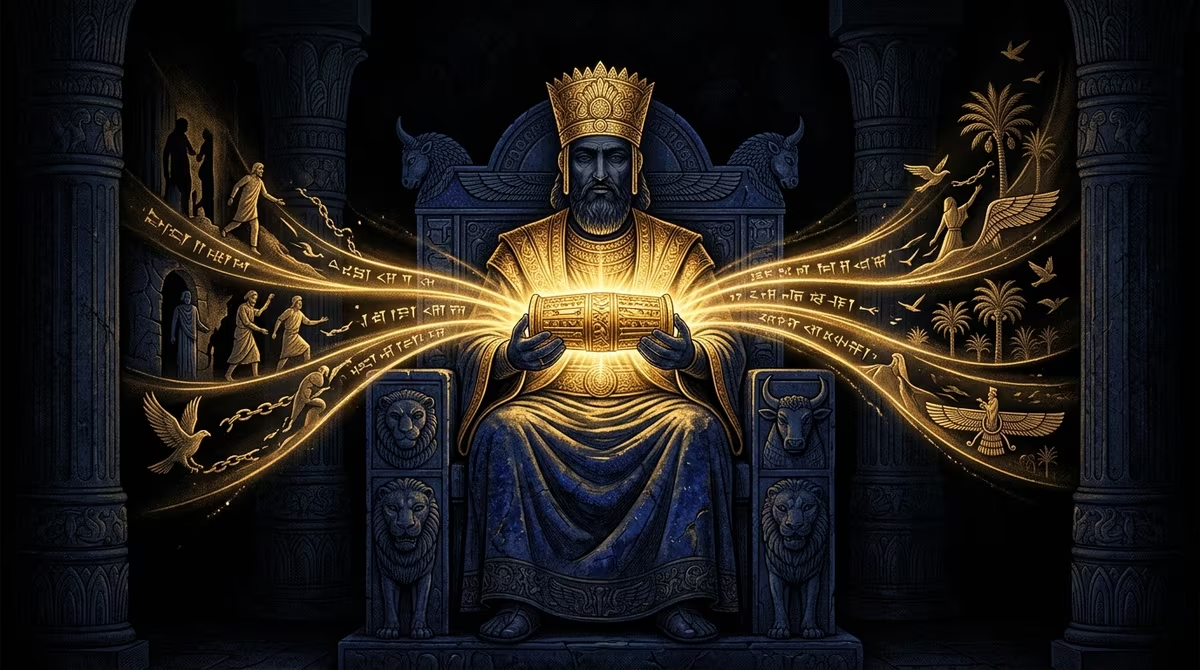
✨ Inscription Summary (Depth Psychological Key)
Cyrus the Great's empire represents the solid historical expression of the Wise Ruler archetype and the integration of the Self. His religious tolerance and charter reflect internal harmony, achieving the royal Faravahar aura without inflating the Ego.
Cyrus the Great and the Charter of Freedom: Manifestation of the Wise Ruler Archetype & Integrated Self
In historical and mythological studies, outstanding historical figures transcend their political roles to become living symbols in the collective unconscious. Cyrus the Great, founder of the Achaemenid Empire, is a prime example of the "Benevolent King" or "Wise Ruler" archetype.
The Benevolent King: Beyond Personal Ego (Ego Transcendence)
In Jungian psychology, one of the greatest dangers threatening those in power is "Ego Inflation"—a state where an individual perceives themselves as equal to God or above the laws of the universe. However, Cyrus the Great's conduct, particularly in conquering Babylon without bloodshed and drafting the Charter of Freedom, indicates the surrender of the Ego to the Higher Self.
The Benevolent King is one who governs his realm not by oppression, but by establishing a balance between opposites. He allows different nations with diverse religions and beliefs to live in peace. This behavior is the perfect embodiment of creating integration in the psyche—where different aspects of the soul (various inner nations and ethnic groups) find their place without being suppressed.
The Cyrus Cylinder: A Manifesto of Psychological Integration and Freedom
Cyrus the Great's human rights charter, beyond a political document, is a symbol of accepting "The Other." From the perspective of analytical psychology, the suppression of others is a reflection of the suppression of unpleasant aspects within ourselves. By freeing Jewish captives and restoring Babylonian temples, Cyrus demonstrated that he had reached the psychological maturity of accepting differences.
"I saved Babylon from ruin. I broke their bonds of captivity..."
This breaking of captivity bonds is the external equivalent of releasing the suppressed parts of the unconscious. When a person releases and recognizes different aspects of their psychology, they achieve inner peace, or "Cyrus's Peace."
Symbolism of the Faravahar and the Achaemenid King
Achaemenid reliefs, especially the Faravahar (or Kayanian Glory), are placed above the heads of kings. What does this symbol represent?
- The Winged Elder: Represents the wisdom of ancestors, guiding consciousness, and the archetype of the Wise Old Man.
- The Ring in Left Hand: Symbol of the covenant of love and loyalty to the transcendental principles of the soul.
- The Forward Direction: Symbol of continuous movement towards individuation, evolution, and forward-thinking.
When the king acts under the shadow of the Faravahar, his decisions emanate from a source beyond his personal desires (Ego); a source that the Achaemenids called "Ahura Mazda" (The Great Wisdom) and Jung described as the "guiding collective unconscious."
Leadership Cyrus-Style for Today's Human
Modern humans live in a world full of fragmentation and contradiction. Psychological modeling of Cyrus the Great means managing the inner realm:
-
Accepting inner opposites without war and bloodshed.
-
Breaking the bonds of captivity from old and suppressed beliefs.
-
Establishing justice and love in human relationships based on the charter of integration and tolerance.
Frequently Asked Questions (FAQ)
❓ How is the Wise Ruler archetype manifested in Cyrus?
Through his capacity to reconcile opposites, deliver justice without vengeful bloodshed, and validate multiple cultures, reflecting inner harmony and psychic integration.
❓ What is 'Ego Inflation' and how did Cyrus remain immune?
Ego Inflation is the unconscious identification with supreme power. Cyrus, by rejecting tyrannical hubris and honoring local cultures, kept his Ego subservient to the higher spiritual Self.
❓ What does his respect for Babylonia's local deities symbolize psychologically?
It symbolizes acknowledging different compartments of the collective psyche, validating inner archetypal diversity instead of enforcing dogmatic suppression.
❓ What is Cyrus's relationship to the concept of 'Farr-e Izadi' (Divine Aura)?
Farr is the external radiance of the Self in the ruler's psyche, a spiritual aura that blossoms when one operates in alignment with wisdom, justice, and collective growth.