Cyrus the Great: The King Who Conquered the Shadow of Power
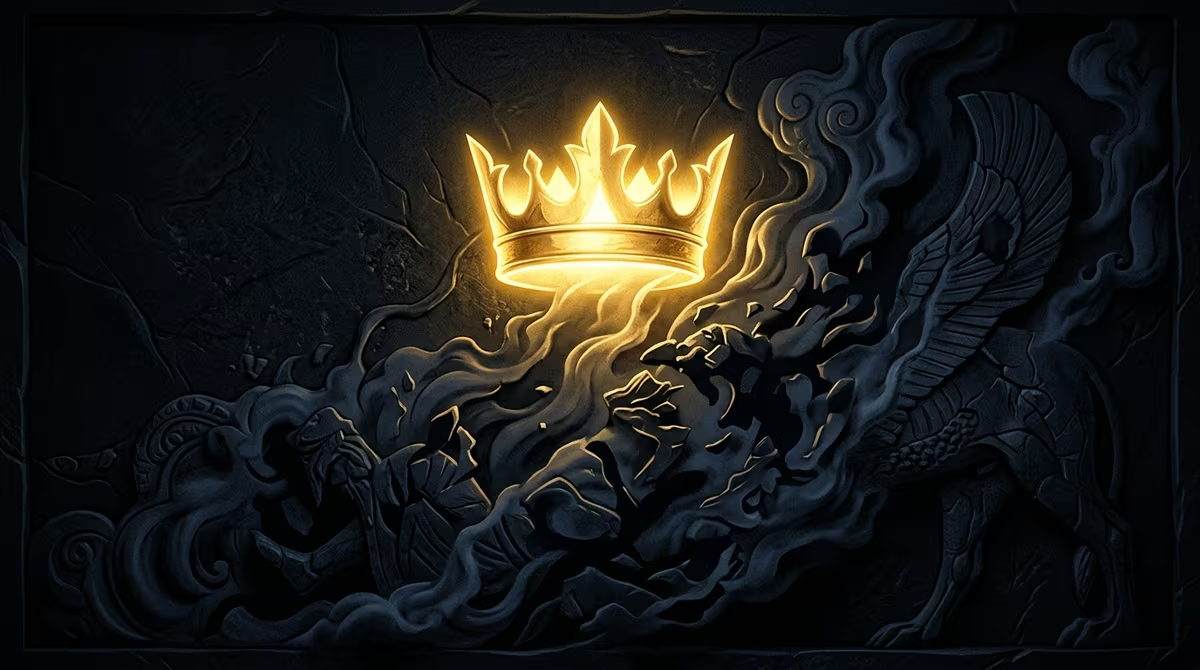
✨ Inscription Summary (Depth Psychological Key)
Overcoming the terrible Shadow of Power is the ultimate psychological trial of any ruler. Cyrus succeeded by integrating his shadow and containing destructive impulses, ensuring outer peace through inner reconciliation.
Cyrus the Great: The King Who Conquered the Shadow of Power
Most ancient monarchs followed an unwritten rule: conquer, burn, pillage, and decapitate. History is replete with conquerors who left rivers of blood in their wake. But 25 centuries ago, a man emerged who shattered this psychological template. He built the largest empire the world had ever seen, yet when he entered Babylon, instead of burning its temples, he respected the faith of the vanquished and freed the enslaved. Was Cyrus the Great’s behavior merely clever politics, or did it stem from something deeper? In this article, we journey into the unconscious mind of Cyrus through the lens of Dr. Carl Gustav Jung.
Shadow Projection: The Psychological Divide Between Cyrus and Assyrian Kings
To understand Cyrus, we must first look at the darkest chapters of ancient history: the Assyrian Empire. Ashurbanipal, the renowned Assyrian king, proudly inscribed on his stone tablets: "I destroyed cities, sowed salt upon their soil, and flayed prisoners alive."
Carl Gustav Jung called this behavior "Shadow Projection". These kings projected their deep-seated inner fears and rage onto the masses to cultivate a false sense of security. They were dominated by the dark aspect of the King archetype, which, driven by the absolute dread of losing control, resorts to utter destruction.
The Awakening of the Positive King Archetype
Yet when Cyrus stood before the gates of Babylon in 539 BC, he dismantled the psychological structure of the ancient world. He entered the city without war or bloodshed. This marks the historic awakening of the "Positive King Archetype". The wise king is the embodiment of order, safety, and paternal compassion for society, thriving on the self-actualization of his subjects.
The Hero’s Journey: Refining Cyrus’s Psyche
Where did this psychological equilibrium originate? According to Xenophon’s Cyropaedia, from his youth in Persia, Cyrus was educated in a system of justice where even the monarch was bound by law. The legend of his birth, abandonment, and survival fits the archetypal pattern of the "Hero’s Journey" in Jungian theory. This journey refined his psyche, teaching him that authentic power lies in service to the people. When he permitted the Jews to return to Jerusalem, he was enacting the role of the "father of the collective unconscious."Individuation and Psychological Wholeness in the Faravahar
The true secret of Cyrus lay in the integration of his psyche. Alongside the Wise King, he possessed the Warrior Archetype at its highest potential. Yet his inner warrior did not act independently; it was fully submissive to the Wise King’s mission of establishing peace. Jung defined this unique balance as "Individuation" or psychological wholeness. The symbol of the Faravahar embodies this triumph of the spiritual mind over primal instincts.
Cyrus the Great proved that the ultimate conquest of an individual is the conquest of self and the integration of the dark shadows of the mind. This is why, after 25 centuries, his name endures.
Further Reflections:
In your opinion, which other historical figure fought a similar inner war between shadow and archetype? Share your psychological analyses with us.
Frequently Asked Questions (FAQ)
❓ What is the 'Shadow of Power' and how does it manifest in rulers?
The Shadow of Power is the unconscious urge to dominate, tyrannize, demean the conquered, and experience god-complex inflation, capturing rulers like Zahhak or Kavus.
❓ What is the Jungian analysis of Cyrus's treatment of Croesus?
Instead of projecting hostile shadow, he accepts his conquered rival as an aspect of the world's plurality, appointing him advisor—a symbol of inner integration.
❓ What is the difference between Shadow Projection in tyrants versus Cyrus?
Despots project all evil outward and execute massacres, whereas Cyrus, recognizing his own shadow, had no need to destroy enemies externally, opting for peaceful tolerance.
❓ How did containing the shadow of power secure Cyrus's legacy?
It prevented the moral decay of his dynasty, prompting conquered subjects to revere him not as an alien usurper, but as a liberator and a channel of transcendental wisdom.