Cambyses: The King Accused of Madness
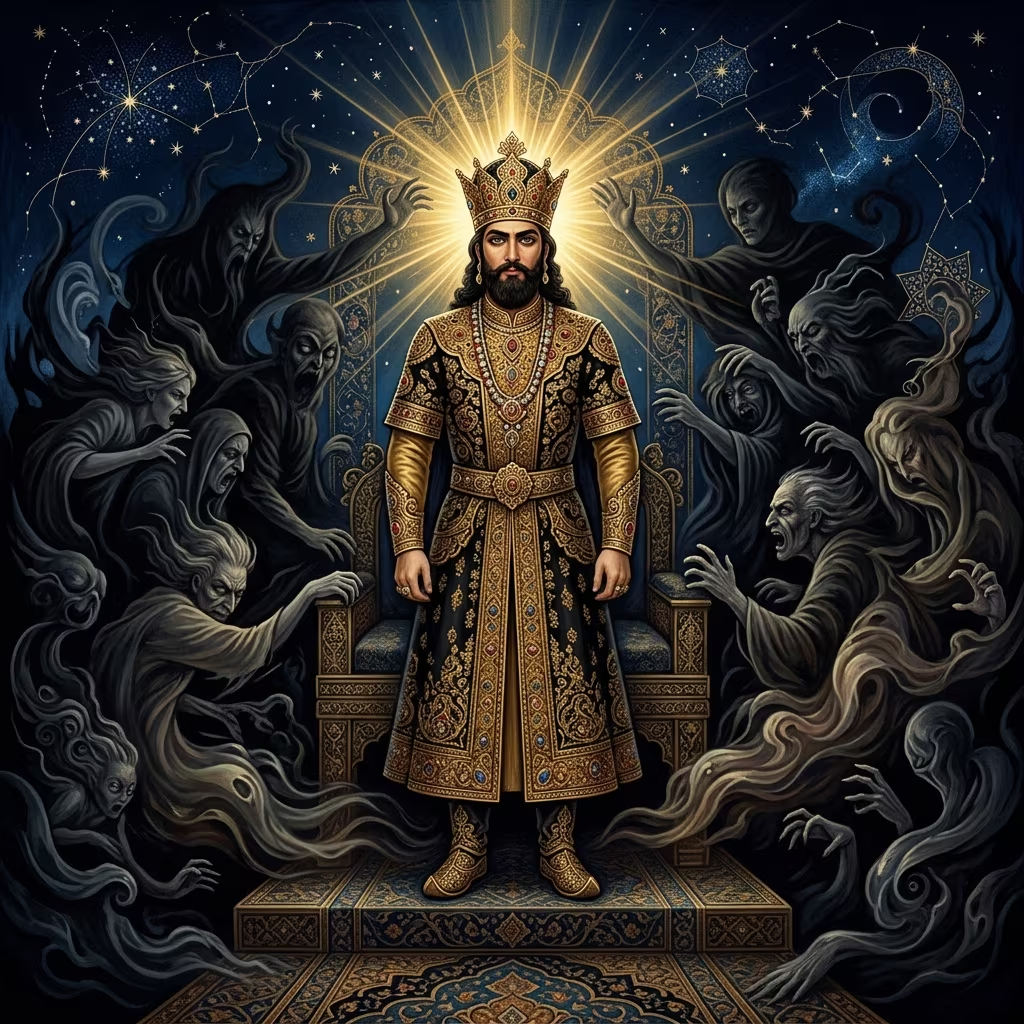
✨ Inscription Summary (Depth Psychological Key)
A psychological analysis of the madness charges against Cambyses II based on the mechanism of collective shadow projection in Herodotus's historiography, representing how a changing empire projected its fears and sins onto its leader.
Cambyses: The King Accused of Madness
Cambyses II, son and successor of Cyrus the Great, conquered Egypt in 525 BC, expanding the Achaemenid realm to an unprecedented scale—yet his name in history is often tied to narratives of violence and madness (primarily reported by the Greek historian Herodotus). This article examines his story from two angles: the genuine grandeur of his military achievements, and the psychological question—was this madness a historical reality or a shadow cast upon him by foreign chroniclers?
The Conquest of Egypt: An Unparalleled Military Feat
Cambyses successfully executed one of the most challenging campaigns of antiquity—crossing the desert to conquer Egypt, a powerful and ancient civilization. This victory made the Achaemenid Empire the largest domain the world had ever seen.
Herodotus: A Narrator, Not an Unbiased Eyewitness
Most reports of Cambyses' bizarre or cruel behavior (such as slaying the sacred Egyptian Apis bull) come from Herodotus—a Greek historian writing generations later, relying on sources from Egyptian priests (who naturally resented their conqueror) or political adversaries. Modern historians read these stories with caution, seeing "Mad Cambyses" as a product of hostile propaganda rather than verified history.
If It Was Political Projection, Why Did the Story Endure?
From a Jungian perspective, labeling a conqueror as "mad" or "evil" is a common defense mechanism of a defeated culture. Rather than accepting defeat, they project their collective shadow onto the ruler, turning him into an irrational demon.
What Persian Sources and Archaeology Reveal
Unlike Herodotus' one-dimensional portrayal, archaeological evidence shows Cambyses initially respected local Egyptian customs and institutions, adopting titles and participating in temple rituals—hardly the actions of an unstable destroyer.
A Psychological Lesson in Reading History
The story of Cambyses reminds us that history is written through the lenses of its narrators. Just as individuals must be wary of their personal projections, historical readers must remain vigilant of the projections of ancient chroniclers.
Conclusion
Cambyses II, conqueror of Egypt and one of the architects of the largest empire of antiquity, is recognized in Western historiography primarily through the biased accounts of Herodotus. A more precise and fair re-evaluation of this era not only reveals a more complex image of this Achaemenid ruler but also teaches us an important lesson about the formation of historical memory and the dangers of uncritically accepting one-sided narratives.
Frequently Asked Questions (FAQ)
❓ Why is the accusation of Cambyses's madness a case of collective shadow projection?
Because Greek historians and Egyptian priests projected their own cultural failures, anxieties, and shadows onto the conquering king to avoid facing their own powerlessness.
❓ What is the discrepancy between the historical and archaeological view of Cambyses?
Greek literary accounts paint him as a blasphemous madman, while modern archaeology proves he restored Egyptian temples and paid formal religious homage to the Apis bull.
❓ What does a king's madness represent in Jungian psychology?
The king represents the central organizing principle of consciousness (Ego/Self). A king's madness signifies the collapse of this order, with the psyche invaded by destructive unconscious forces.