Anahita: The Divine Anima and Returning to the Forgotten Psyche
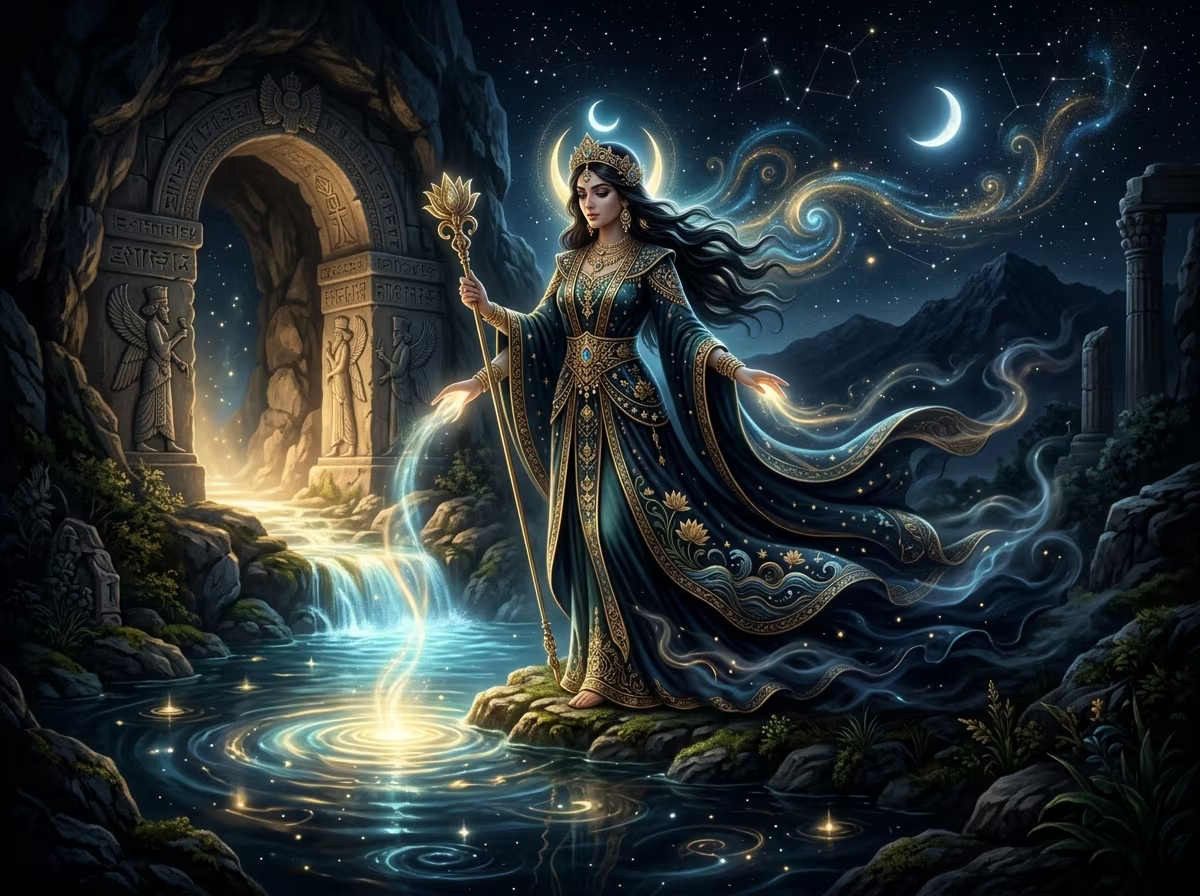
✨ Inscription Summary (Depth Psychological Key)
Anahita, the ancient goddess of waters and fertility, represents the highest manifestation of the divine, positive Anima in the unconscious. She embodies purity, life-giving nurturance, intuition, and creative inspiration, connecting the conscious mind to the refreshing springs of inner wisdom.
Anahita: The Divine Anima and Returning to the Forgotten Psyche
Among all the symbols of Iranian mythology, perhaps none represents the positive, divine aspect of the feminine psyche—namely, the Anima—as profoundly as Anahita: the goddess of waters, fertility, and wisdom. If Sudabeh embodies the manipulative and toxic projection of the Anima, Anahita is her absolute counter-archetype: the embodiment of purity, nurturance, and deep connection with the life-giving sources of the psyche.
The Anima Through Jung's Lens
The Anima is the feminine aspect of the male unconscious—the source of inspiration, emotion, intuition, and creativity. Jung believed that a healthy relationship with one's inner Anima rescues an individual from rigid, purely logical, and outer-focused life, allowing access to deeper layers of meaning and beauty. However, the Anima, like the Animus, can manifest in two opposite forms: the inspiring and nurturing Anima (symbolized by Anahita) or the manipulative and destructive Anima (appearing in figures like Sudabeh or specific seductive legends).
The crucial point here is that Anahita, as a goddess (rather than a human literary character like Farangis or Sudabeh), represents the Anima at its highest and purest level—not a mortal woman navigating moral choices, but a cosmic and divine force symbolizing life's source itself.
Anahita: The Goddess of Life-Giving Waters
In ancient Iranian beliefs, Anahita was the divinity of running waters, fertility, and abundance. Water, in most cultures and particularly in Jungian symbolism, represents the unconscious—a deep, fluid, and elusive reservoir for everyday consciousness, yet vital for life and growth. Anahita, as the mistress of these waters, represents precisely that part of the psyche which, though invisible, is the prerequisite for all growth and creativity.
The worship of Anahita in sanctuaries situated near springs and rivers reinforces this symbolic connection: accessing the inspiring Anima requires a certain "closeness to the source"—quiet, reflection, and connection to one's inner nature.
Anahita vs. Sudabeh: The Dual Faces of the Anima
Comparing Anahita to Sudabeh mirrors the pattern we saw between Farangis and Sudabeh at the Animus level, but this time at the Anima level. Sudabeh, despite her beauty and allure, employs these traits for deception and manipulation—representing an Anima that leads to illusion and astray rather than inspiration. Anahita, in complete contrast, is inspiration, blessing, and wisdom flowing naturally into life without deceptive intent.
From a Jungian perspective, every person (regardless of gender, in their unconscious depths) faces both aspects of this force. The fundamental question is: which face of the Anima do we recognize and nurture?
Returning to Anahita: Reviving the Forgotten Aspect
In the modern world, many have lost touch with the intuitive, creative, and nurturing aspects of their psyche—swallowed by external logic, haste, and performance metrics. A symbolic return to Anahita, in Jungian terms, means restoring connection with this forgotten side: dedicating time to silence, connecting with nature, and trusting intuition rather than relying solely on dry analysis.
Why Anahita Matters Today
Anahita reminds us that creativity, intuition, and inspiration are vital resources for a complete life—not "unnecessary" or marginal luxuries. A society (or individual) that neglects this inspiring force eventually grows dry and soulless. Anahita, with her symbol of flowing, life-giving waters, is an invitation to restore the value of this forgotten dimension to our daily existence.
Conclusion
Anahita, contrasted with Sudabeh, illustrates the other side of the same psychic force—one that can serve inspiration and life (Anahita) or deception and ruin (Sudabeh). This ancient goddess, with her bond to flowing, life-giving waters, remains an eternal invitation to return to the deepest, most creative depths of the human psyche—a part we need to remember today more than ever in our hurried world.
Frequently Asked Questions (FAQ)
❓ Why is Anahita the ultimate symbol of the positive Anima?
Because unlike human literary characters, Anahita as a cosmic goddess embodies the purest facets of the Anima: absolute purity, nurturing inspiration, creative birth, and an unblemished connection to the deep unconscious.
❓ What does water represent in Jungian symbolism and its link to Anahita?
Water universally symbolizes the unconscious—fluid, deep, and life-giving. As the mistress of waters, Anahita represents the psychic layer that feeds our conscious life, without which our creative spirit grows arid.