Amir Kabir: Victim of the Courtly Shadow of Envy
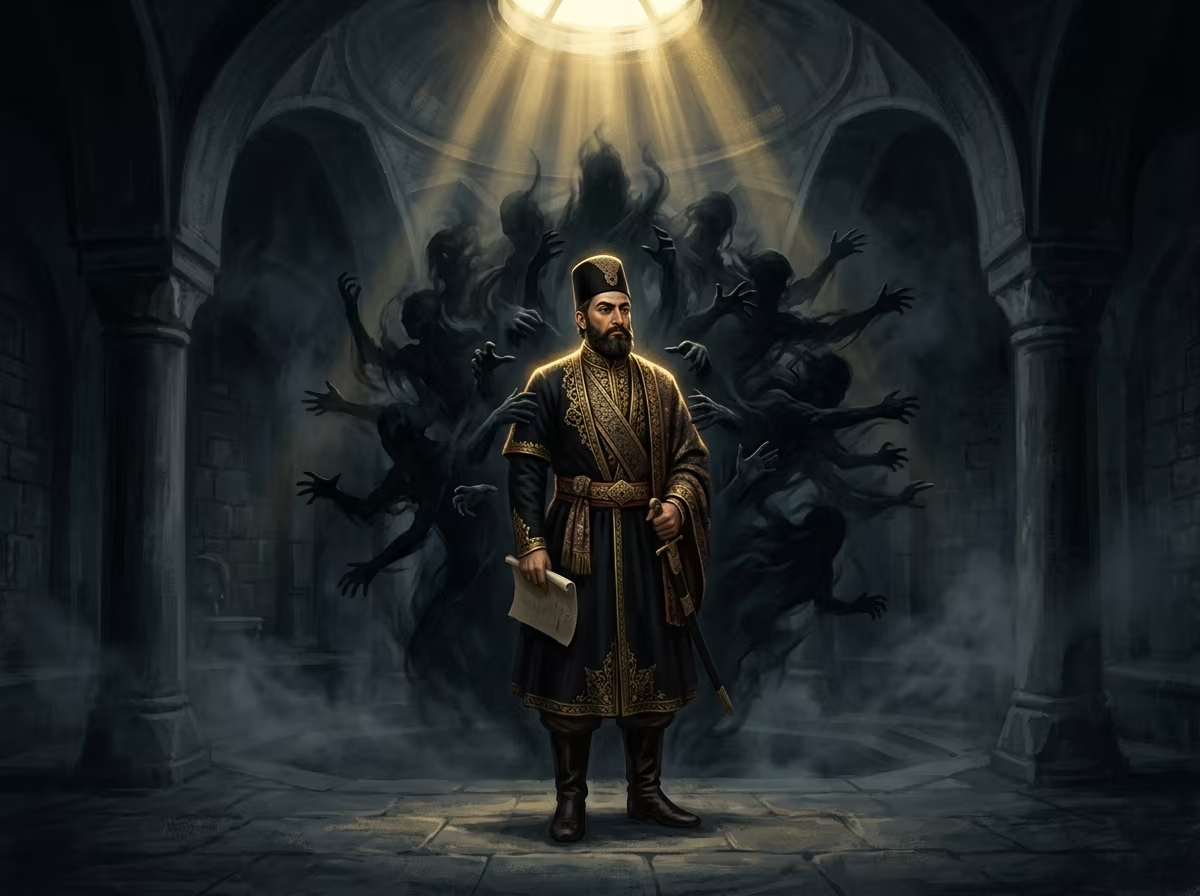
✨ Inscription Summary (Depth Psychological Key)
The tragedy of Amir Kabir, Iran's reformist chancellor, is a historical manifestation of collective shadow projection. The Qajar court's inability to face their own envy and inadequacy in the face of his success led them to project their darkness onto him, plotting his murder in the Fin Bathhouse.
Amir Kabir: Victim of the Courtly Shadow of Envy
Mirza Taghi Khan Amir Kabir, the reformist chancellor of Nasser al-Din Shah Qajar's era, laid the foundations of modern Iranian development—from founding the Darolfonoon academy to reforming the tax and judicial systems—in less than three years of tenure. Yet his fate, in the Fin Bathhouse of Kashan by order of the same king he brought to power, became one of the bitterest tragedies of modern Iranian history. This article reinterprets the fall of Amir Kabir through the lens of the Jungian concept of Shadow Projection.
Shadow Projection from Jung's Perspective
Jung explained that when individuals or groups fail to confront their own dark, weak, or undesirable aspects, they often project these traits onto another—meaning instead of accepting an internal weakness or envy, they manifest it as accusation, hostility, or hatred toward an external person. The more successful or prominent that external person is, the more intense this projection can be—because their success serves as a painful reflection of the projectionists' own inadequacy or envy.
The Qajar Court: A Breeding Ground for Collective Envy
Through his reforms, Amir Kabir directly targeted the interests of a vast class of courtiers, princes, and officials who benefited from the corruption and disorder of the previous system. His popularity with the people, his outstanding efficiency, and his closeness to the young king aroused deep envy among those who saw themselves as small and insignificant in the shadow of this capable minister.
From a Jungian perspective, this situation provided the perfect ground for collective shadow projection: instead of confronting their personal inadequacy or envy, a coalition formed that focused all these negative emotions on Amir Kabir, portraying him as a dangerous threat deserving of elimination.
Mahd-e Olia: The Catalyst
Nasser al-Din Shah's mother (Mahd-e Olia) was one of the most prominent figures of this coalition. Amir Kabir's growing power and influence, which extended to reducing the court's informal privileges, made her one of the chancellor's fiercest opponents. This dynamic—where a force close to the throne views a reforming minister's power as a direct threat to their position—is a classic example of how shadow projection can escalate from a personal level into a coordinated and effective conspiracy.
Nasser al-Din Shah: A King Caught Between Two Forces
Nasser al-Din Shah's youth and inexperience placed him between two opposing forces: on one hand, Amir Kabir, who played the role of a father and teacher to him and had directly helped him gain and secure the throne; on the other hand, a circle of close associates and his mother, who constantly sowed seeds of distrust and suspicion in his mind toward the seemingly "overly powerful" minister.
From a Jungian view, this situation bears a striking resemblance to the pattern we see elsewhere in Iranian mythological history (the relationship between Afrasiab and Garsivaz in the story of Farangis and Siavash): constant, toxic whispering that gradually sways a powerful but immature mind from trusting a constructive force to harboring suspicion and taking destructive actions.
Fin Bathhouse: A Symbol of Elimination, Not Defeat
The bitter and meaningful point is that Amir Kabir was neither defeated in battle nor outmatched in open competition; he was murdered in a remote bathhouse, without a public trial. This method of elimination—secretly, without direct confrontation—is itself testament to the nature of shadow projection: forces that, due to their inability to directly and honestly confront Amir Kabir's superiority, preferred to eliminate him through secret conspiracy rather than open competition.
A Legacy the Shadow Could Not Erase
Despite this tragic end, Amir Kabir's reforms—particularly the founding of Darolfonoon, which nurtured subsequent generations of Iranian reformers and intellectuals—endured. This point is hopeful from a Jungian perspective: even when shadow projection temporarily triumphs and destroys a constructive force, the authentic and original achievements of that force can remain beyond the reach of this destruction at a deeper level.
Why Amir Kabir's Story Matters Today
The life of Amir Kabir is a historical warning about the danger of collective shadow projection in any institution or society: when people, instead of facing their own inadequacy or envy, project these feelings onto an efficient and reformist individual, the result can be the destruction of a society's most valuable assets—its honest and effective individuals.
Summary
Amir Kabir, as one of the most prominent reformers of modern Iranian history, fell victim to one of the clearest examples of collective shadow projection in the history of this land. His story is a bitter but necessary reminder that sometimes, the greatest threat to a constructive force comes not from external enemies, but from the envy and insecurity of those who feel small in the shadow of its success.
Frequently Asked Questions (FAQ)
❓ How did shadow projection play out in Amir Kabir's assassination?
Incompetent courtiers, instead of facing their own inadequacy, projected their malice onto Amir Kabir, framing him as a dangerous threat to the crown to justify his elimination.
❓ Which mythic pattern does the relationship between Nasser al-Din Shah and Amir Kabir resemble?
The pattern of Afrasiab and Garsivaz in Siavash's story, where the immature ruler's mind is poisoned by envious whispers, leading to the destruction of a loyal, constructive force.
❓ Why is the manner of Amir Kabir's execution in the Fin Bathhouse psychologically significant?
His covert execution in a remote bathhouse showcases the cowardice of the shadow, which cannot survive the open light of truth and must act through secrecy and isolation.